5S Consulting and Training Service
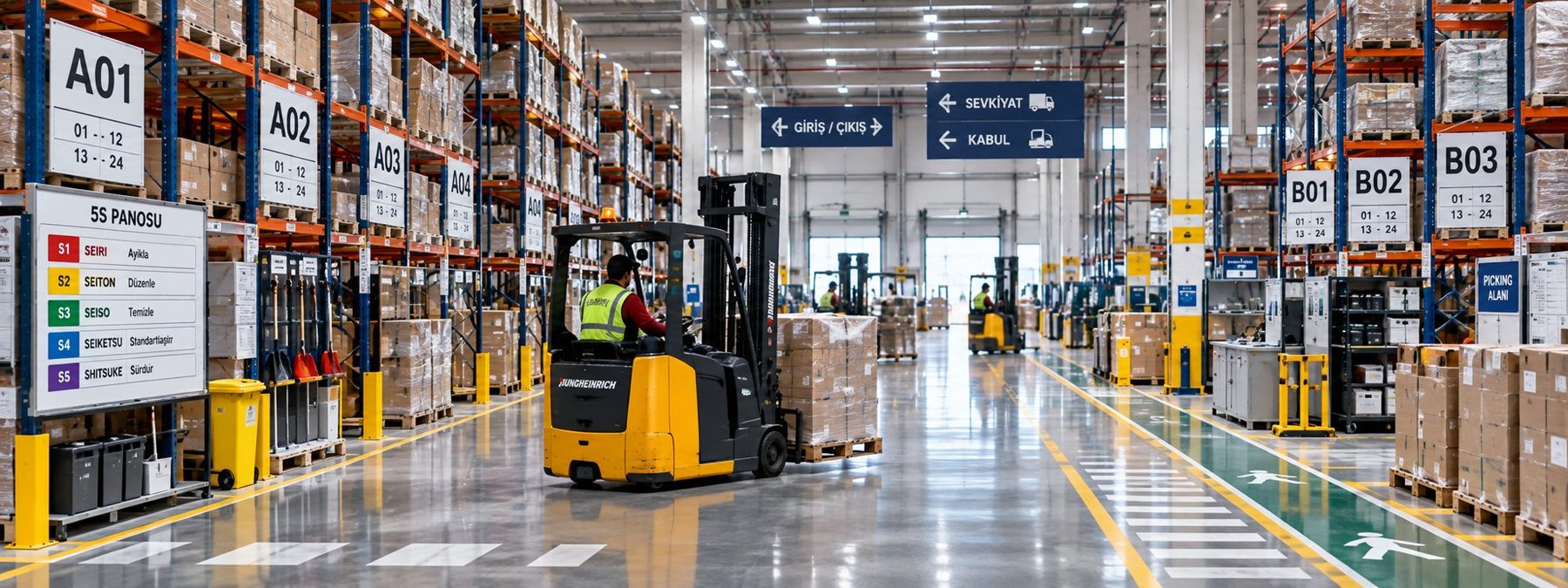
In companies, the foundation of order, productivity and sustainable improvement starts with working habits on the shop floor. Messy areas, unnecessary equipment and non-standard practices negatively affect not only productivity but also quality, safety and employee motivation. At this point the 5S approach stands out as one of the most fundamental and effective tools of lean manufacturing.
But 5S is not just a cleaning or tidying exercise. When it is not designed correctly it remains a short-lived campaign and provides no lasting benefit. That is why 5S consulting and training services play a critical role in helping companies understand this approach correctly and make it sustainable. The service we offer as Gemba Partner aims to create real transformation on the shop floor.
What Is 5S? Its Core Purpose and Contribution to Companies
The question “What is 5S?” is often answered as a “cleaning system”; but this definition is quite incomplete. 5S is a lean management approach made up of the steps Seiri, Seiton, Seiso, Seiketsu and Shitsuke that aims to make work areas more efficient, safe and standard.
The core purpose of 5S is to sort out what is unnecessary, place what is necessary in the right place and make this order sustainable. This way search times decrease, errors are noticed more easily and the risk of workplace accidents drops. It also creates a more comfortable and controlled work environment for employees.
For companies, 5S implementation means increased productivity, improved quality and operational discipline. Especially on production floors, 5S prepares a strong ground for other lean tools.
What Does the 5S Consulting Service Cover?
5S consulting service starts with analyzing the company’s current state. The 5S maturity level is clarified through shop floor observations, employee input and process evaluations. This analysis ensures that a company-specific roadmap is created rather than a standard recipe.
The consulting process covers not only what will be done but also how and why. Each of the 5S steps is adapted to the shop floor and real ways of working are taken into account. This way a living system is created rather than one that stays on paper.
Also, within the scope of consulting, guidance is provided for team leaders and managers. Ownership and continuity of 5S require the active participation not only of shop floor employees but also of management.
How Does the 5S Training Program Proceed?
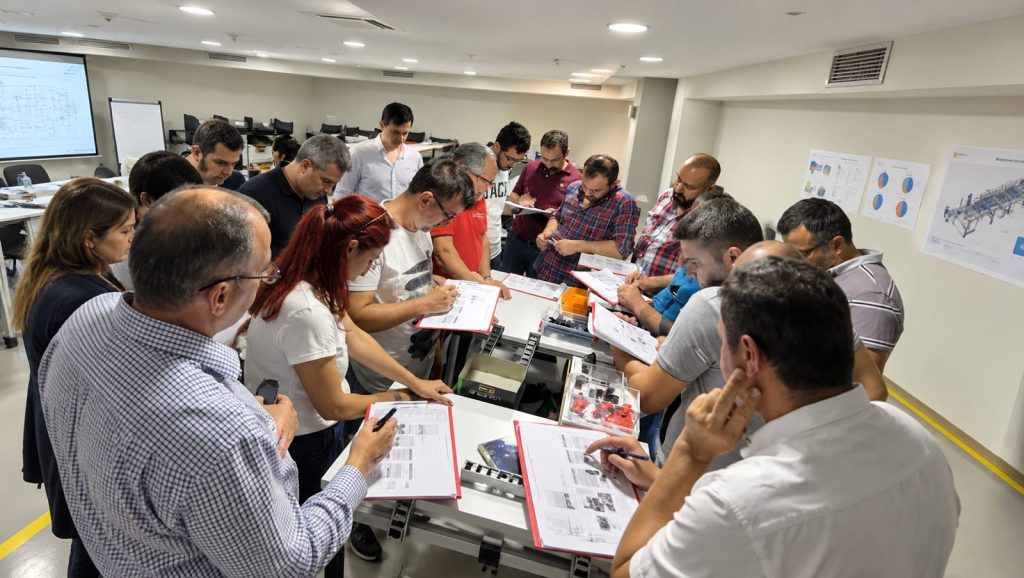
The 5S training program is built on a structure in which theoretical knowledge is supported by practice on the shop floor. The trainings aim not only for participants to gain knowledge but to change their perspective.
Basic Training Content
In the basic training stage, what 5S is, why it is needed and its place within lean manufacturing are covered in detail. Participants clearly learn the purpose of each 5S step and its counterpart on the shop floor.
At this stage, learning is reinforced with sample applications, visuals and case analyses. The aim is to show that 5S is not just a theoretical concept but a part of daily work.
Hands-On Training Modules
Hands-on training modules are carried out directly on the shop floor. Practices done on real work areas make the knowledge learned lasting.
Participants experience the sorting, setting in order and standardization steps first-hand. This way the training stops being an abstract explanation and turns into concrete transformation.
5S Implementation Process: Step-by-Step Roadmap
5S implementation requires a planned and disciplined process. Tidying done at random quickly reverts to its old state. Therefore a roadmap that proceeds step by step is critically important.
Preparation and Analysis Phase
In the preparation phase, target areas are determined and teams are formed. The purpose of the process is clearly explained to employees. This communication is very important in preventing resistance.
In the analysis phase, the current state is recorded with photos and observations. These records create a reference point for measuring progress.
Shop Floor Implementation and Standardization
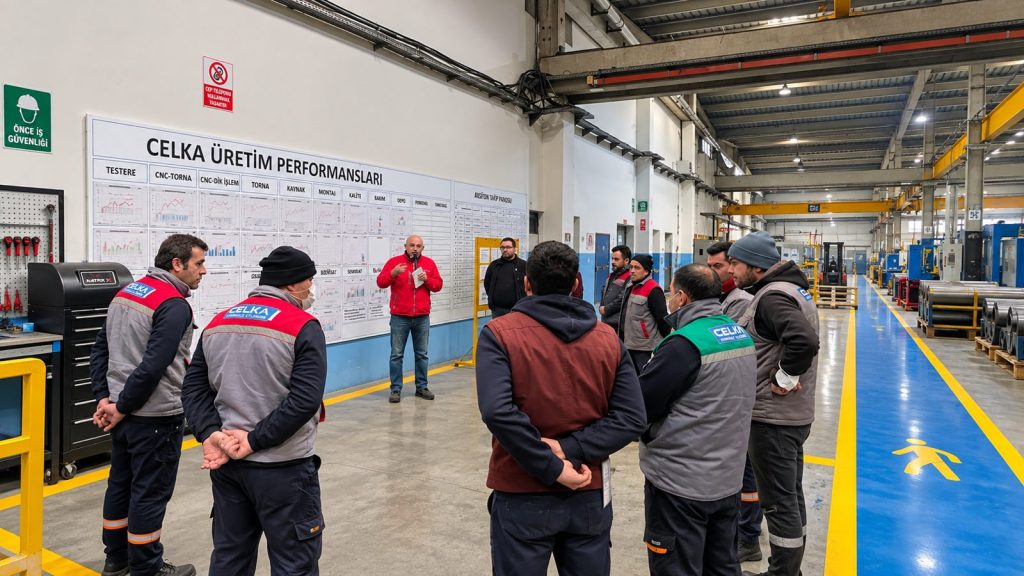
Shop floor implementation is the most visible phase of 5S. Unnecessary equipment is sorted out and necessary items are positioned ergonomically and logically. Cleaning is used not only physically but also as a tool for detecting abnormalities.
In the standardization phase, the order achieved is made permanent. Visual standards, checklists and responsibility definitions come into play at this stage.
5S Audits and Sustainability Management
The 5S audit is one of the most important elements ensuring the sustainability of the implementation. Audits should be treated not as blame or control mechanisms but as tools that support development.
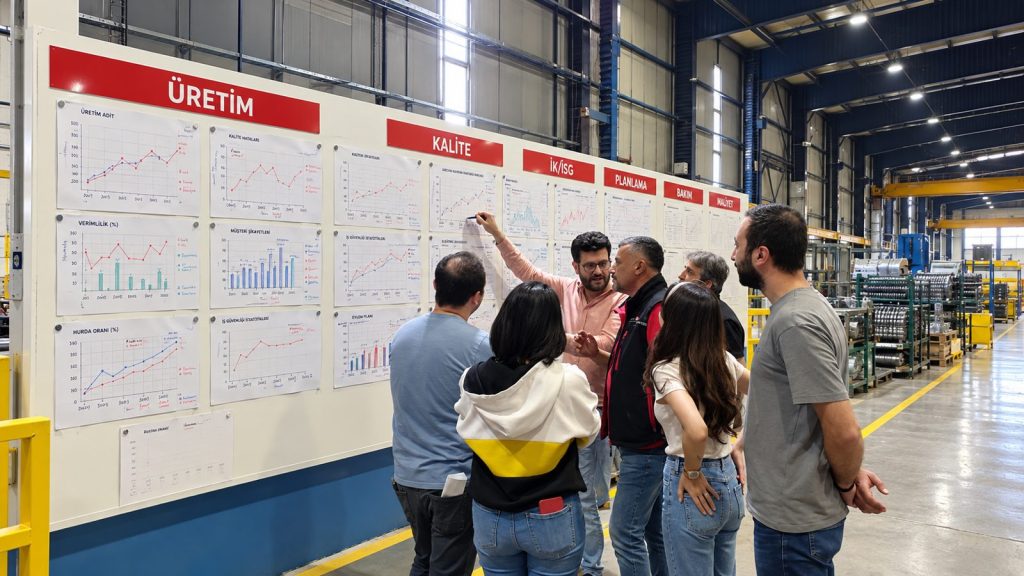
Thanks to regularly conducted audits, deviations from standards are noticed early. This makes 5S a natural part of daily work.
Sustainability management begins with accepting that 5S is not a project but a culture. Audits, feedback and improvement actions feed this culture.
Benefits of the 5S Consulting and Training Service
The 5S consulting and training service provides companies with concrete benefits in a short time. Orderly work areas increase productivity while reducing errors and losses. It also creates a more controlled environment in terms of occupational safety.
From the employees’ perspective, 5S practices strengthen the sense of ownership. An employee who is responsible for their own area takes a more active part in the process.
In the long term, 5S forms the foundation of a continuous improvement culture. It provides a strong infrastructure for the implementation of other lean tools.
Why Gemba Partner’s 5S Consulting and Training Service?
As Gemba Partner, we treat 5S not just as a technical tool but as a behavior and culture transformation. Observations made on the shop floor and employee feedback are at the center of our approach.
Instead of ready-made templates, we develop solutions suited to the company’s real needs. This way the implementations produce value not in the short term but in the long term.
By offering training, consulting and shop floor implementation within a holistic structure, we make companies’ 5S journey sustainable.
Frequently Asked Questions
How long does 5S implementation take?
The 5S implementation time depends on the size of the selected area and the current state. Results can be achieved within a few weeks in pilot areas. The rollout process proceeds gradually.
In which sectors can it be applied?
5S can be applied in many sectors, including manufacturing, logistics, healthcare, services and office environments. The basic principles are universal.
Is employee training mandatory?
Yes, employee training is critical to the success of 5S. Implementations done without training are not lasting.
How are 5S results measured?
5S results can be measured with audit scores, time gains, error rates and shop floor observations.
How are consulting and training packages structured?
Packages are specially designed according to the company’s needs and goals. Training, implementation and audit steps are planned together.