MODULE 2 - ADVANCED LEVEL LEAN TECHNICAL ANALYSIS TRAININGS
VSM – Value Stream Analysis Training
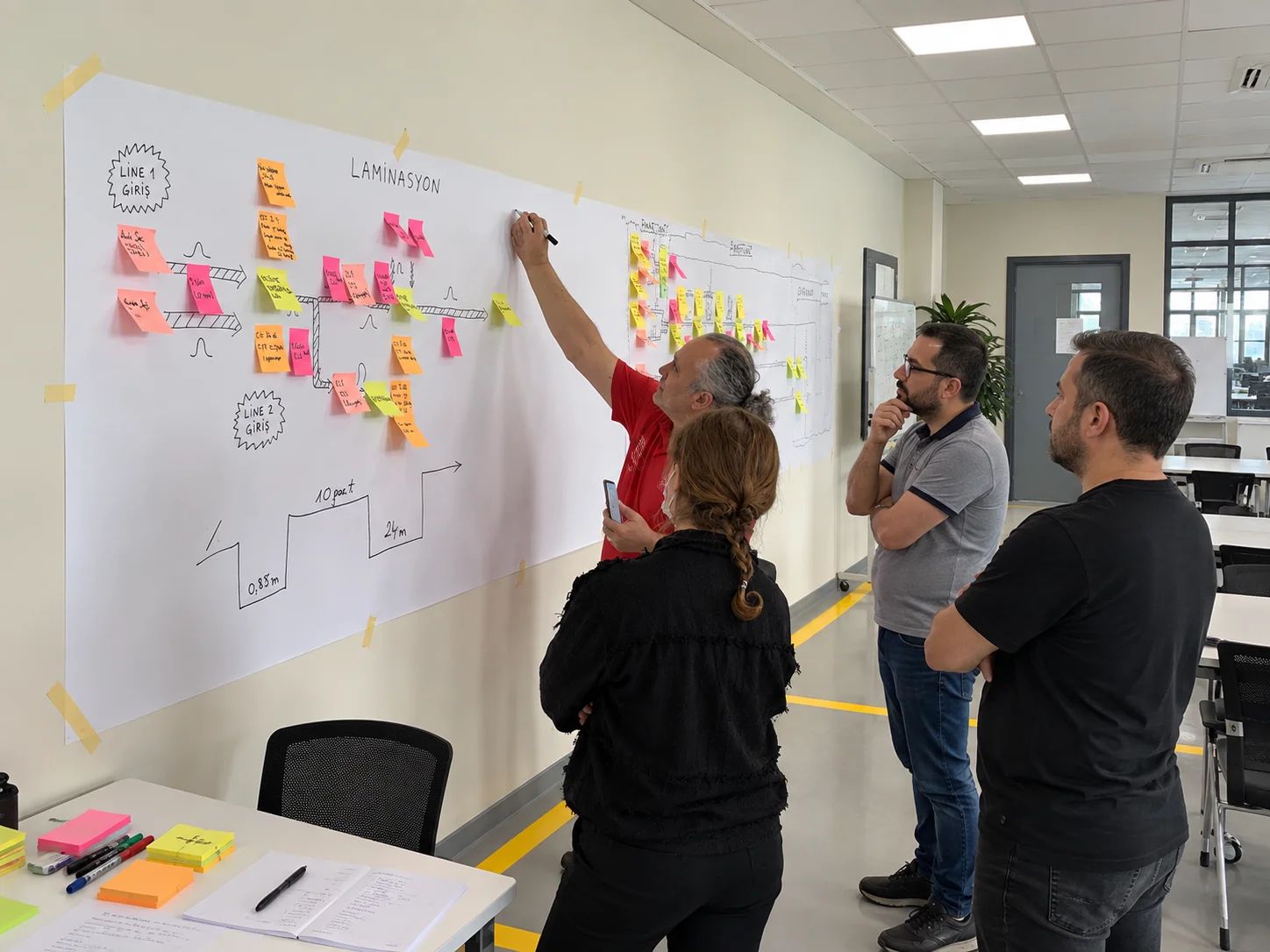
After the flow-creation and value-adding techniques learned in the Module 1 trainings, the first training topic for protecting the value gained and spreading it across the whole process is Value Stream Analysis. Value stream lets us look at the whole process holistically and, by revealing value-added and non-value-added times within the lead time that extends to the customer in the information and product flow, lets us see the bottlenecks. After the first part of the Value Stream Analysis training, which is generally heavy on theory, is completed, a sample study is carried out on a defined scenario and VSM analysis is conveyed to participants hands-on with all its instruments.
Standard Work – Line Balancing Analysis Training
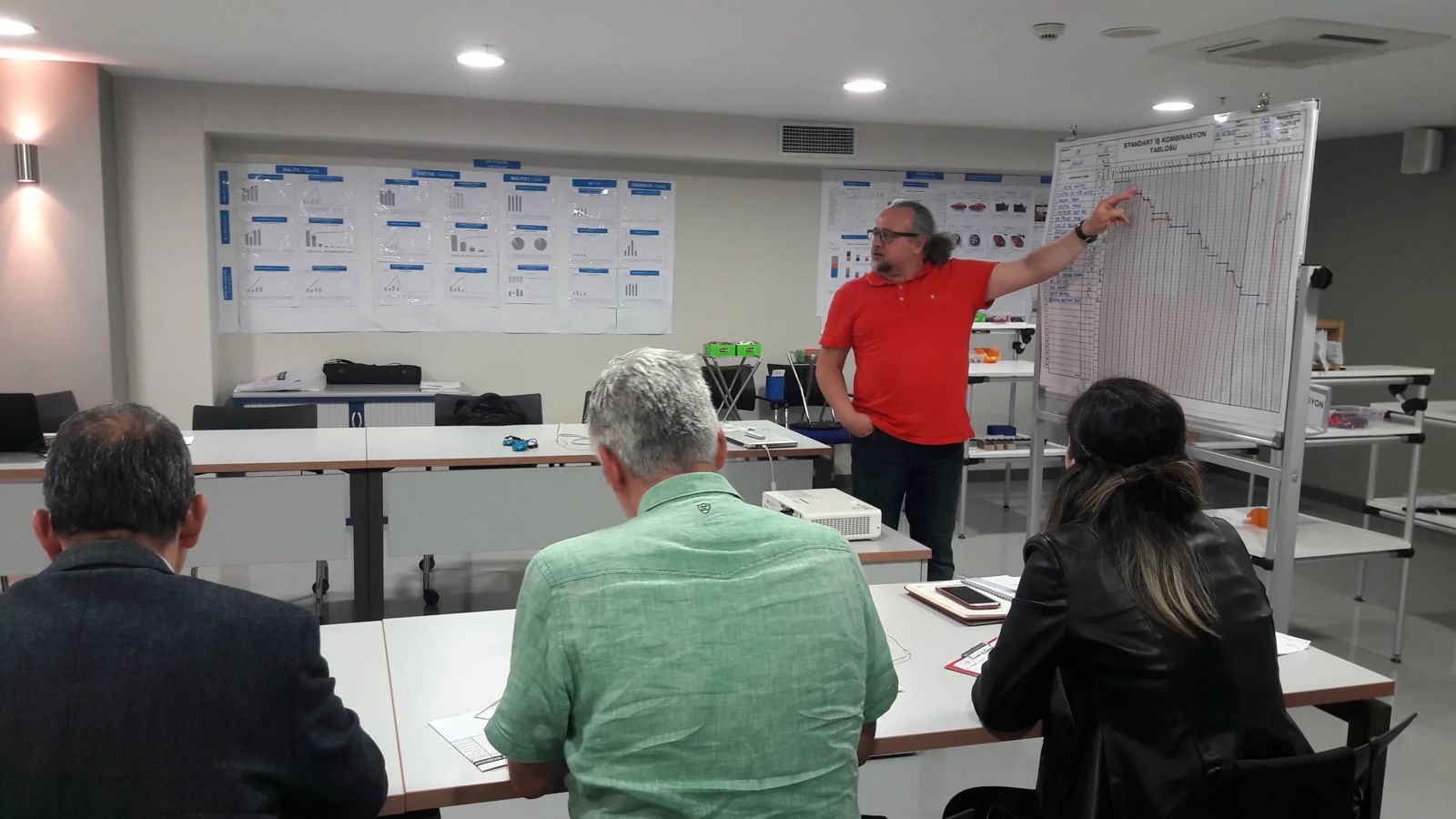
In this training, where Standard Work, the most basic tool of Lean Manufacturing, is handled both theoretically and hands-on, the function and components of standard work are emphasized. To create standard work, time study analyses are effectively demonstrated and bottleneck process improvements are exemplified. It is the training that should be taken second among our advanced-level trainings in order to clearly learn the difference between a production line without a standard work structure and one where the foundations of standard work are established.
SMED – Changeover Time Analysis Training
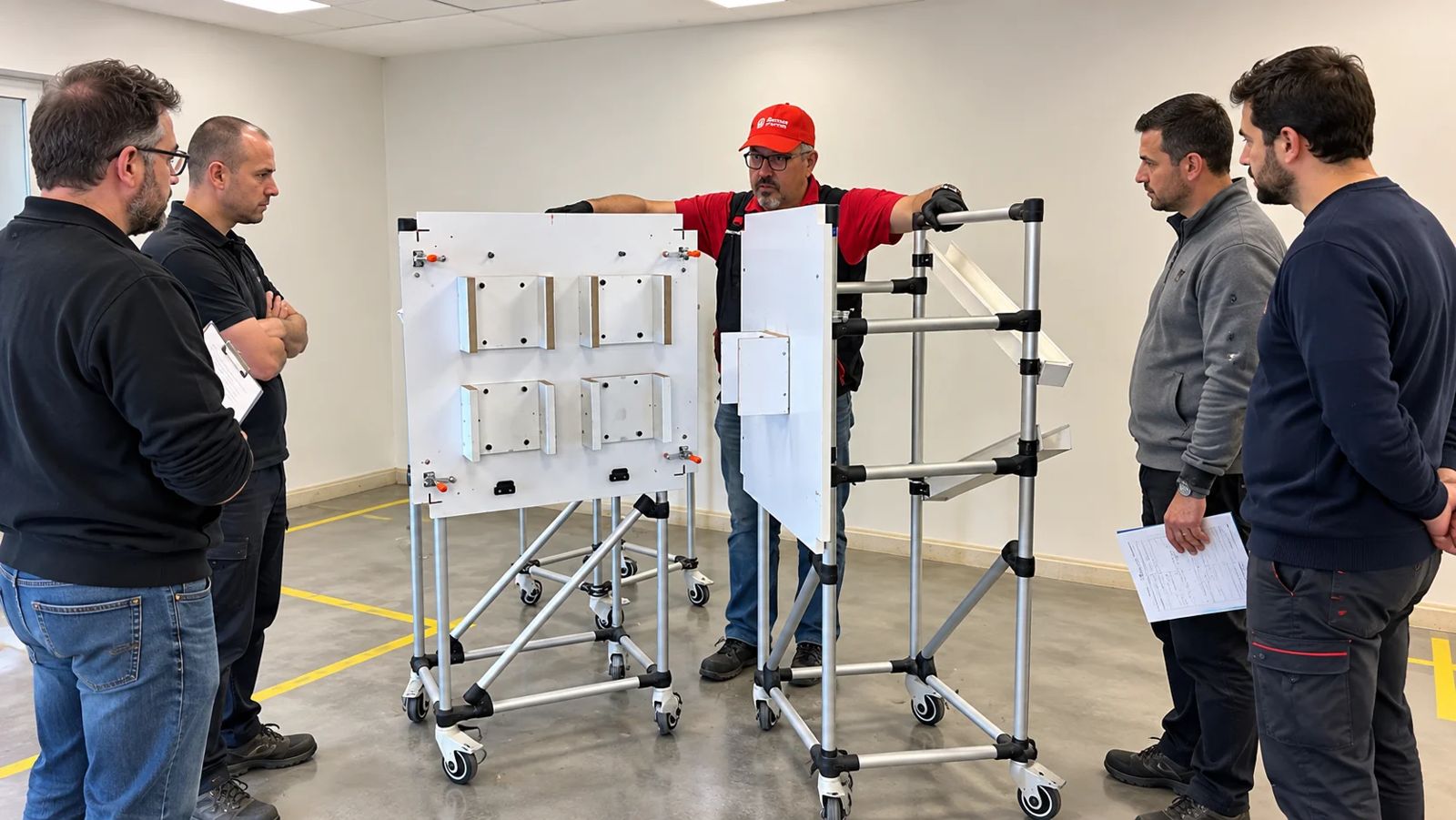
SMED = Single Minute Exchange of Die. It is an effective method, still current today, aimed at increasing flexibility and efficiency by minimizing downtime in production processes. Through this hands-on study, in which we cover both theoretically and practically examining changeover times in detail and identifying the waste elements that lengthen them with SMED analysis, participants gain the competencies needed to reduce changeover times in their own companies to single-digit minute levels and increase equipment availability.
Built-in Quality – Poka-yoke Training
Producing quality products by building quality requirements into the process, rather than ensuring quality by inspecting the product, is one of the main principles of Lean Thinking. In this training, methods of designing a process by meeting quality requirements on production lines where standard work is in place are conveyed to participants through both theoretical and practical exercises.
Workshop Management and Leadership Training
With the introduction of shop floor management and development systems, the role of leaders within the organization becomes more important. In order to move to daily management in production activities in particular, developing leaders' management competencies is an important strategy. For active shop floor management, one of the main aims of the Shop Floor Leader Development program is for leaders to become experts in particular in PDCA management and the use of Lean Tools. For our training designed as a workshop, participation of first-line shop floor managers and leaders is important for developing management skills.
A3 Practical Problem Solving
Developing the perspective of shop floor leaders on the problems encountered in daily shop floor management and on managing these problems, and putting problem-solving techniques into use, will take the daily operation a step further and also preserve standards. The most suitable method for leaders to respond quickly to problems and reduce their impact is the A3 Practical Problem Solving method. Shop floor managers and leaders who know how to use Lean tools and have theoretical knowledge should attend this training, which enables reaching the root cause quickly and is organized both theoretically and hands-on.
Let's Determine the Right Training for Your Team Together
MODULE 2 - ADVANCED LEVEL LEAN TECHNICAL ANALYSIS TRAININGS
VSM – Value Stream Analysis Training
After the flow-creation and value-adding techniques learned in the Module 1 trainings, the first training topic for protecting the value gained and spreading it across the whole process is Value Stream Analysis. Value stream lets us look at the whole process holistically and, by revealing value-added and non-value-added times within the lead time that extends to the customer in the information and product flow, lets us see the bottlenecks. After the first part of the Value Stream Analysis training, which is generally heavy on theory, is completed, a sample study is carried out on a defined scenario and VSM analysis is conveyed to participants hands-on with all its instruments.
Standard Work – Line Balancing Analysis Training
In this training, where Standard Work, the most basic tool of Lean Manufacturing, is handled both theoretically and hands-on, the function and components of standard work are emphasized. To create standard work, time study analyses are effectively demonstrated and bottleneck process improvements are exemplified. It is the training that should be taken second among our advanced-level trainings in order to clearly learn the difference between a production line without a standard work structure and one where the foundations of standard work are established.
SMED – Changeover Time Analysis Training
SMED = Single Minute Exchange of Die. It is an effective method, still current today, aimed at increasing flexibility and efficiency by minimizing downtime in production processes. Through this hands-on study, in which we cover both theoretically and practically examining changeover times in detail and identifying the waste elements that lengthen them with SMED analysis, participants gain the competencies needed to reduce changeover times in their own companies to single-digit minute levels and increase equipment availability.
Built-in Quality – Poka-yoke Training
Producing quality products by building quality requirements into the process, rather than ensuring quality by inspecting the product, is one of the main principles of Lean Thinking. In this training, methods of designing a process by meeting quality requirements on production lines where standard work is in place are conveyed to participants through both theoretical and practical exercises.
Workshop Management and Leadership Training
With the introduction of shop floor management and development systems, the role of leaders within the organization becomes more important. In order to move to daily management in production activities in particular, developing leaders' management competencies is an important strategy. For active shop floor management, one of the main aims of the Shop Floor Leader Development program is for leaders to become experts in particular in PDCA management and the use of Lean Tools. For our training designed as a workshop, participation of first-line shop floor managers and leaders is important for developing management skills.
A3 Practical Problem Solving
Developing the perspective of shop floor leaders on the problems encountered in daily shop floor management and on managing these problems, and putting problem-solving techniques into use, will take the daily operation a step further and also preserve standards. The most suitable method for leaders to respond quickly to problems and reduce their impact is the A3 Practical Problem Solving method. Shop floor managers and leaders who know how to use Lean tools and have theoretical knowledge should attend this training, which enables reaching the root cause quickly and is organized both theoretically and hands-on.