What Is Operational Excellence?

What Is Operational Excellence?
Achieving sustainable success in modern business is possible not only by producing good products but by building systems that can deliver them in the most efficient, highest-quality and lowest-cost way. The pinnacle of this systematic approach is called operational excellence .
In this comprehensive guide prepared by Gembapartner, we address in all its dimensions operational excellence, one of the most fundamental disciplines that set a company apart from its competitors.
Fundamentals of the Operational Excellence Concept
The simplest answer to the question of what operational excellence is: it is an organization’s ability to execute its strategies more consistently and reliably than its competitors. But this is not just “doing things right”; it is also “doing the right things, in the right way and continuously improving.”
At the core of this concept lies the Shingo Model . According to Shingo, operational excellence is not merely using tools (Lean, Six Sigma, etc.) but turning the principles behind these tools into a corporate culture. It is a structure in which every employee can see problems in the value stream and is empowered to solve them.
Goals of Operational Excellence
Operational excellence programs aim to achieve the following core objectives in businesses:
-
Maximize Customer Satisfaction: Deliver the quality the customer expects, in the time they expect.
-
Eliminate Waste: Reduce costs by eliminating every process that adds no value (waiting, excess inventory, defective production, etc.).
-
Gain Agility: Adapt quickly to changing market conditions and customer demands.
-
Sustainable Growth: Create a repeatable and improvable business model instead of accidental successes.
The Relationship Between Operational Excellence and Lean Management
Operational excellence and lean management are often used interchangeably, but there is a subtle difference. Lean management is a set of methodologies focused on eliminating waste and optimizing the value stream. Operational excellence goes beyond these methodologies and is a focus on results and culture that covers the entire organization, from leadership behaviors to employee engagement.
Lean management is the most important toolbox on the road to operational excellence. Reaching excellence without building a “lean” system is almost impossible.
Components of the Operational Excellence Model
A successful operational excellence model is built on four main pillars:
-
Cultural Transformation: A work environment where everyone is a problem solver, based on respect and humility.
-
Process Management: End-to-end defined, standardized and measurable processes.
-
Continuous Improvement: A Kaizen mindset that rejects the status quo and aims to be better every day than the day before.
-
Strategic Alignment: Linking the company’s top-level vision with the lowest-level operational activities (through KPIs).
Methods and Tools Used in Operational Excellence
The popular tools used on the operational excellence journey play a critical role in diagnosing and solving problems:
-
Kaizen: Small but continuous improvement steps.
-
Six Sigma: Reducing variability in processes to bring the defect rate down to 3.4 per million.
-
5S: Workplace organization and discipline.
-
VSM (Value Stream Mapping): Mapping the value stream and identifying wastes.
-
OEE (Overall Equipment Effectiveness): Measuring equipment productivity.
-
Hoshin Kanri: Deploying strategic goals across the entire organization.
Building an Operational Excellence Culture
Many companies fail despite applying technical tools (Lean or Six Sigma). The main reason is neglecting the “culture” component. For an excellence culture, the following are essential:
-
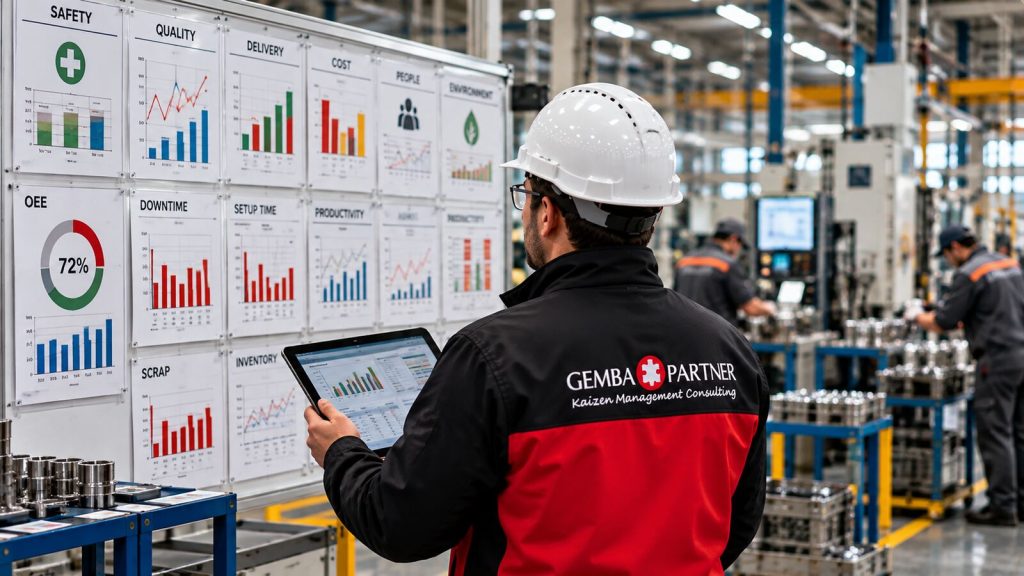
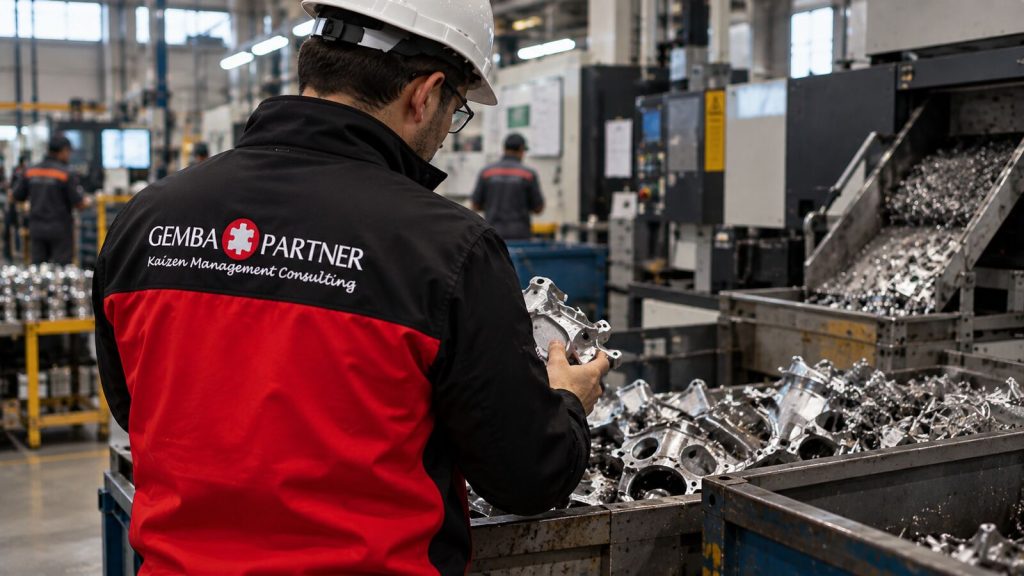
Leadership Support: Managers must not only give instructions but be at the shop floor (Gemba) in person, coaching employees.
-
Psychological Safety: Employees must know they will not be punished for making mistakes and that mistakes will instead be seen as a learning opportunity.
-
Transparency: Data and performance must be visible to everyone.
Implementation Steps of Operational Excellence
The transition to operational excellence generally consists of the following phases:
-
-
Current State Analysis: Determining where the company stands in terms of productivity, quality and cost.
-
Defining Vision and Strategy: What do we understand by excellence? Which goals do we want to achieve?
-
Pilot Implementations: Creating a “success story” in a specific line or department.
-
Rollout: Transferring the learnings in the pilot area to the whole organization.
-
Standardization and Auditing: Standardizing processes to protect the gains.
-
Operational Excellence Success Criteria
To understand whether the program is successful, the following indicators (KPIs) are examined:
-
Reduction in Lead Times: Shorter time from order to delivery.
-
Increase in Quality Rates: Rising right-first-time (RFT) rates.
-
Number of Employee Suggestions: Evidence of how involved employees are in the process.
-
Decrease in Unit Cost: The reflection of productivity gains in financial results.
Recommendations for Companies Wanting to Build an Operational Excellence Program
Companies embarking on this journey should not forget the following critical points:
-
Don’t See It as a Project: Operational excellence is not a destination but a journey. It has no end.
-
Invest in People: Even the most advanced technology sits idle without competent people to use or improve it.
-
Be Patient: Cultural change takes time. In the first months, focus on behavior changes rather than big financial leaps.
-
Speak with Data: Base your decisions on real data from the shop floor, not on personal opinions.
Operational Excellence with the Gemba Partner Approach
As Gembapartner, we do not see operational excellence merely as a “productivity increase” method. In our approach, what matters is enabling companies to become self-improving, learning organizations.
We go to the Gemba with you, identify hidden waste in your processes together and manage end to end the cultural and technical transformation that will eliminate this waste. Our goal is to help you build an internal competence center that can sustain excellence without needing an outside consultant.
You can benefit from our professional guidance to discover your company’s potential and take the first step on the operational excellence journey.