What Is Hands-On Training?
What Is Hands-On Training?
In an age when information is quickly accessed but just as quickly consumed, merely “knowing” is not enough. What makes the real difference is how knowledge is turned into action on the shop floor. Especially in manufacturing and services, the most effective way to increase staff competence is hands-on training, which sits at the center of modern companies’ development strategies.
As Gembapartner, we believe knowledge gains value only through application. In this guide we will look at the fundamentals of hands-on training and the value it will bring to your business.
What Does Hands-On Training Mean?
Hands-on trainingis the process by which a student or employee internalizes theoretical knowledge by experiencing it in real-world scenarios, with physical tools or directly on the job. In this model based on the “learning by doing” philosophy, the learner is not a passive listener but an active part of the process.
In a business context, hands-on training covers a broad range, from an operator learning to use a new machine to a manager identifying waste on the shop floor. It is the only method that turns knowledge into muscle memory and behavior change.
Differences Between Theoretical Training and Hands-On Training
There are fundamental structural differences between traditional training models and hands-on models:
-
Learning Style: In theoretical training, knowledge transfer is verbal or visual; in hands-on training it is tactile and experiential.
-
Retention: While most knowledge learned theoretically is forgotten within weeks, knowledge reinforced by practice turns into lasting competence.
-
Margin for Error: In theoretical training, making a mistake means a “wrong answer.” In hands-on training, making a mistake is the most valuable learning opportunity for understanding how the process works.
-
Feedback: In hands-on training results are immediate; you can see the output of an action right away and correct it.
Benefits of Hands-On Training for Businesses
Why should companies prefer shop-floor-focused models over classroom training? Here are the answers:
-
Fast Adaptation: Employees adapt to new processes or technologies in much less time.
-
Productivity Increase: Because the most correct and shortest way of doing the job is applied on the shop floor, time losses decrease.
-
Lower Error Rates: Thanks to “on-the-job training,” risks are experienced in a safe environment, which lowers scrap and error rates in real production.
-
Confident Employees: An employee who accomplishes a job with their own hands gains motivation and trust in the company.
In Which Areas Is Hands-On Training Preferred?
Hands-on training can be adapted to nearly every discipline but is of critical importance in some areas:
-
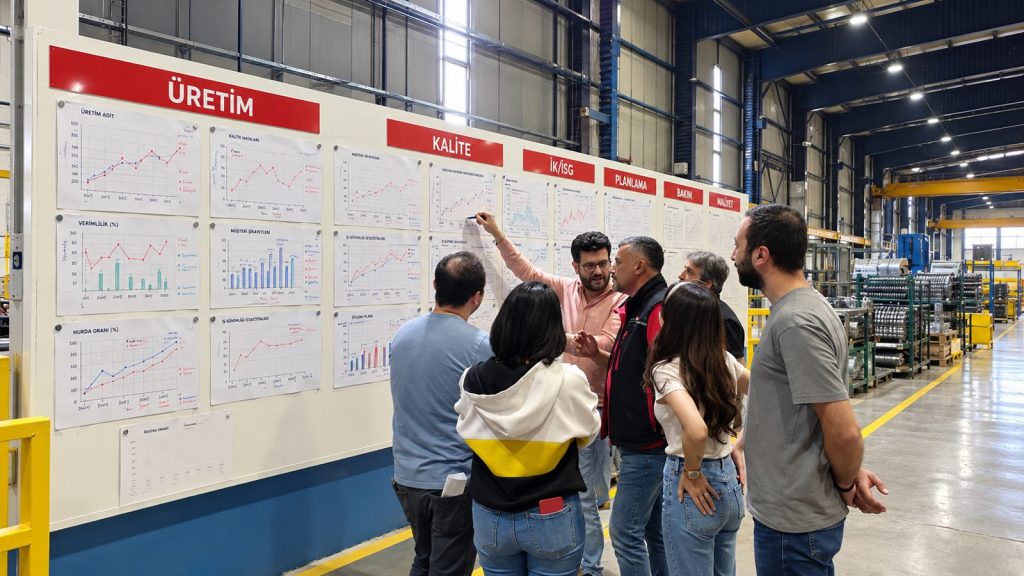
Lean Manufacturing Techniques: Methods such as 5S, SMED or Kaizen are learned not in the classroom but at the machine itself.
-
Occupational Health and Safety: Experiencing danger through simulations rather than theoretical rules saves lives.
-
Technical Skill Development: Skills such as welding, CNC programming or assembly are gained only through practice.
-
Digital Transformation: The use of new software (MES, ERP) should be learned through practice with real data.
The Relationship Between the Gemba Approach and Hands-On Training
The term “Gemba” means “the real place where the work is done” in Japanese. In the lean management philosophy, it is essential for managers and trainers to go to the shop floor themselves to solve problems and improve the process.
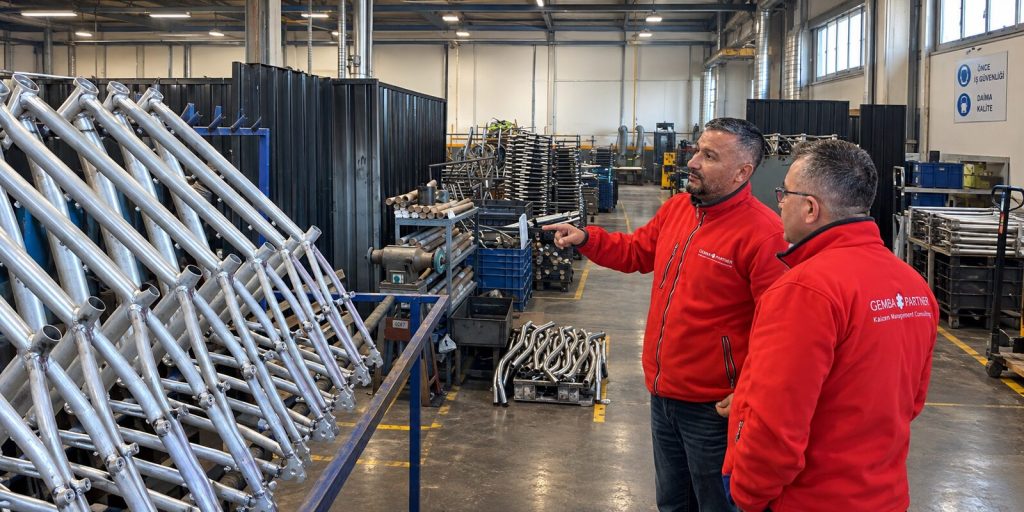
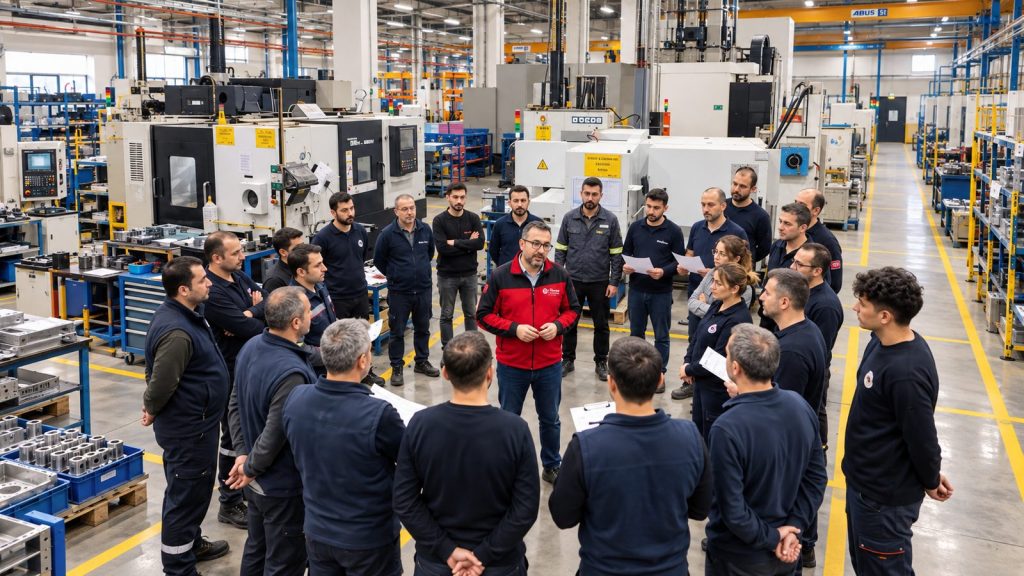
Hands-on training with the Gemba approachmeans taking training out of the comfort of the classroom to the production line, the warehouse or the operational center of the office. In this approach the trainer is not a teacher but a “master/coach.” They guide the student and encourage them to solve real problems. Training done at the Gemba is based on the realities of the shop floor, not theoretical assumptions.
How Should Hands-On Training Be Planned?
A successful implementation process should follow these steps:
-
Needs Analysis: Which competence gap is preventing production or efficiency?
-
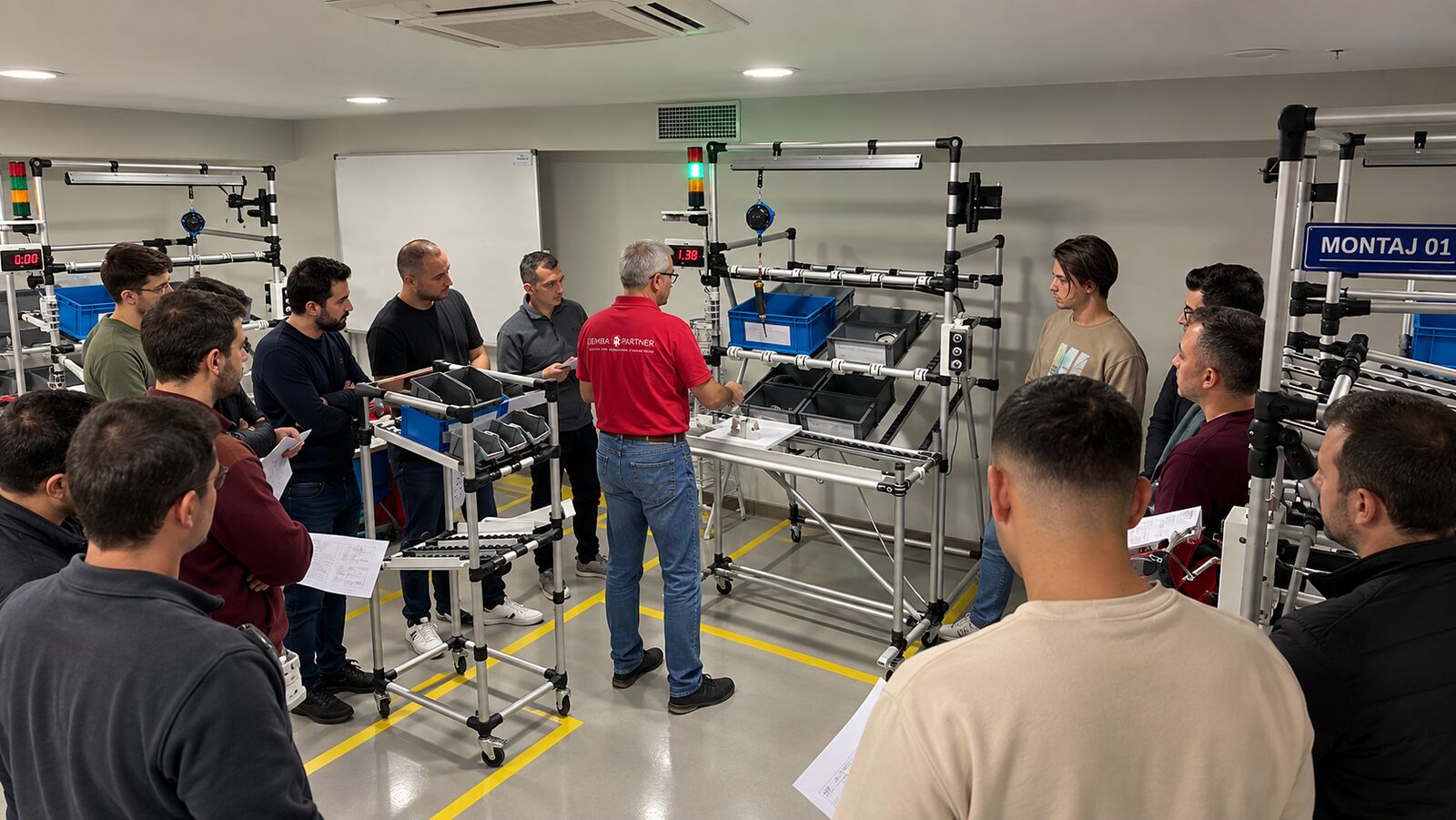
Show First, Then Have Them Do It: The trainer first performs the task flawlessly themselves, then has the student do it under supervision.
-
Observe Mistakes: The student should be allowed to make mistakes in a safe area and the root cause of the mistake should be examined together.
-
Standardization: The correct way of doing it should be turned into a standard work instruction.
-
Measurement and Evaluation: At the end of the training, the employee’s competence level should be measured with concrete outputs (speed, quality, etc.).
Who Is Hands-On Training Suitable For?
Although it is often thought to be only for blue-collar workers, hands-on training is for every level of the organization:
-
Operators: To develop their technical skills and problem-solving ability.
-
Engineers: To understand how the processes they design play out on the shop floor.
-
Managers: To gain the ability to detect waste on the shop floor (Gemba Walk) and to coach.
Gemba Partner’s Hands-On Training Approach
As Gembapartner, we embrace the principle “Tell them and they forget, show them and they remember, involve them and they understand.” In our training models, we move participants from being passive listeners to architects of their own processes.
Using real scenarios from your factory or office, we identify waste on the shop floor, perform SMED changeovers right at the machine and carry out Kaizen projects together. For us, success is the participant saying “I can do this” at the end of the training.
How Is Lasting Learning Achieved with Hands-On Training?
For lasting learning, the 70-20-10 rule should be considered: People get 70% of their learning from experience (practice), 20% from social interaction (feedback) and only 10% from formal training (theory).
Hands-on training covers this 70% and 20% slice, ensuring that knowledge moves from short-term memory to long-term memory and ultimately becomes a habit.
Why Is Hands-On Training the Training Model of the Future?
With the rise of artificial intelligence and automation, simply having knowledge no longer provides a competitive advantage. What is valuable in the business world of the future is being able to manage complex systems, make quick decisions on the shop floor and carry out continuous improvement.
Hands-on training supported by digital tools (VR, AR and simulations) will multiply the speed of learning and make companies far more agile and resilient. This model is the most sustainable method that maximizes the potential of human resources.
Hands-on training combines the coldness of theory with the dynamism of the shop floor. For your company to reach its productivity goals, your employees need not just to know but to be able to do.