What Is Visual Management in Business?
What is visual management? Visual management is a lean management approach that aims to make processes, performance and problems easy for everyone to understand. It relies on conveying information through visual tools, without the need for verbal explanations or long reports.
What Is Visual Management?
Visual management is a lean management approach that aims to make processes, performance and problems in a business easy for everyone to understand. It relies on conveying information through visual tools, without the need for verbal explanations or long reports. This way employees, managers and shop-floor teams speak the same language and act on the same reality.
The simplest answer to “What is visual management?” is: making anything abnormal instantly noticeable to everyone. Colors, symbols, boards, indicators and markings make processes transparent. This approach speeds up decision-making, especially on production and operations floors, and helps prevent errors before they grow.
Visual management has an important place within the lean thinking system and is not limited to factory floors. It can be used effectively in many areas, from office processes to warehouse management, from maintenance activities to quality control practices.
What Is the Main Purpose of Visual Management?
The main purpose of visual management is to make what is happening on the floor or within a process understandable at a glance. In environments where information is hidden or known only by certain people, problems are noticed late and response times grow. Visual management removes this delay.
Another core purpose is to make standards visible. The difference between right and wrong can be distinguished without written instructions. This increases employees’ ability to take initiative while reducing the risk of mistakes.
Visual management also creates shared awareness across teams. When goals, performance indicators and daily priorities are clear to everyone, individual efforts are directed toward a common purpose.
The Place of Visual Management in Lean Philosophy
Lean philosophy aims to eliminate waste and maximize value. Visual management is one of the most powerful tools for reaching this goal, because much of waste stems from problems being noticed late.
In the lean production approach to visual management, problems are meant to be brought to light, not hidden. For example, when a stoppage occurs on a production line, it is essential that it is noticed visually right away. This way root cause analysis starts without delay.
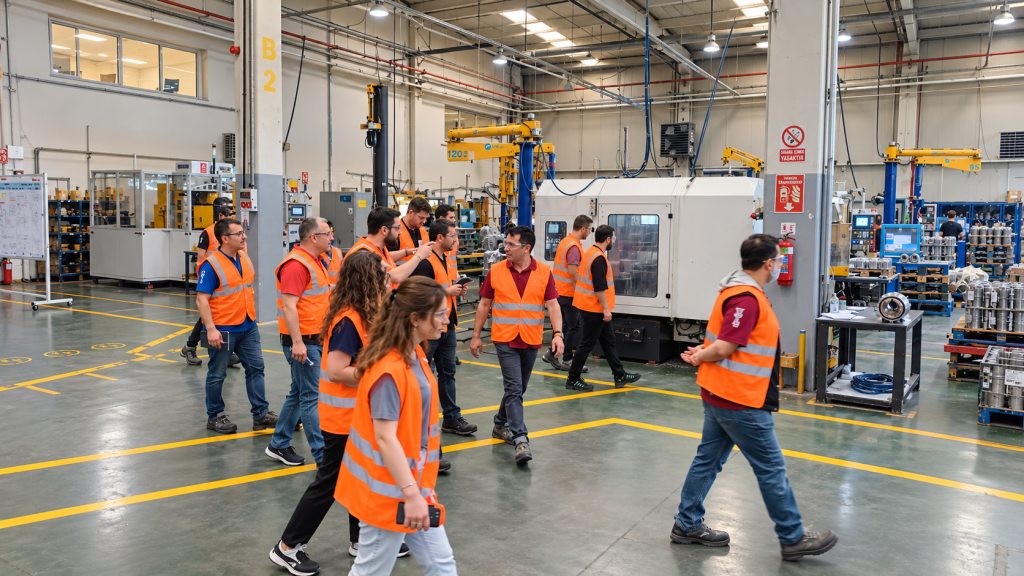
Visual management is also one of the factors that increase the effectiveness of gemba walks. Managers going to the floor can understand the current situation without complex reports. This makes the “go and see” principle truly work in practice.
What Are the Types of Visual Management?
Visual management practices can be classified into different types according to their purpose. One of the most common types is visual control practices. Color codes, floor markings and labels fall into this group.
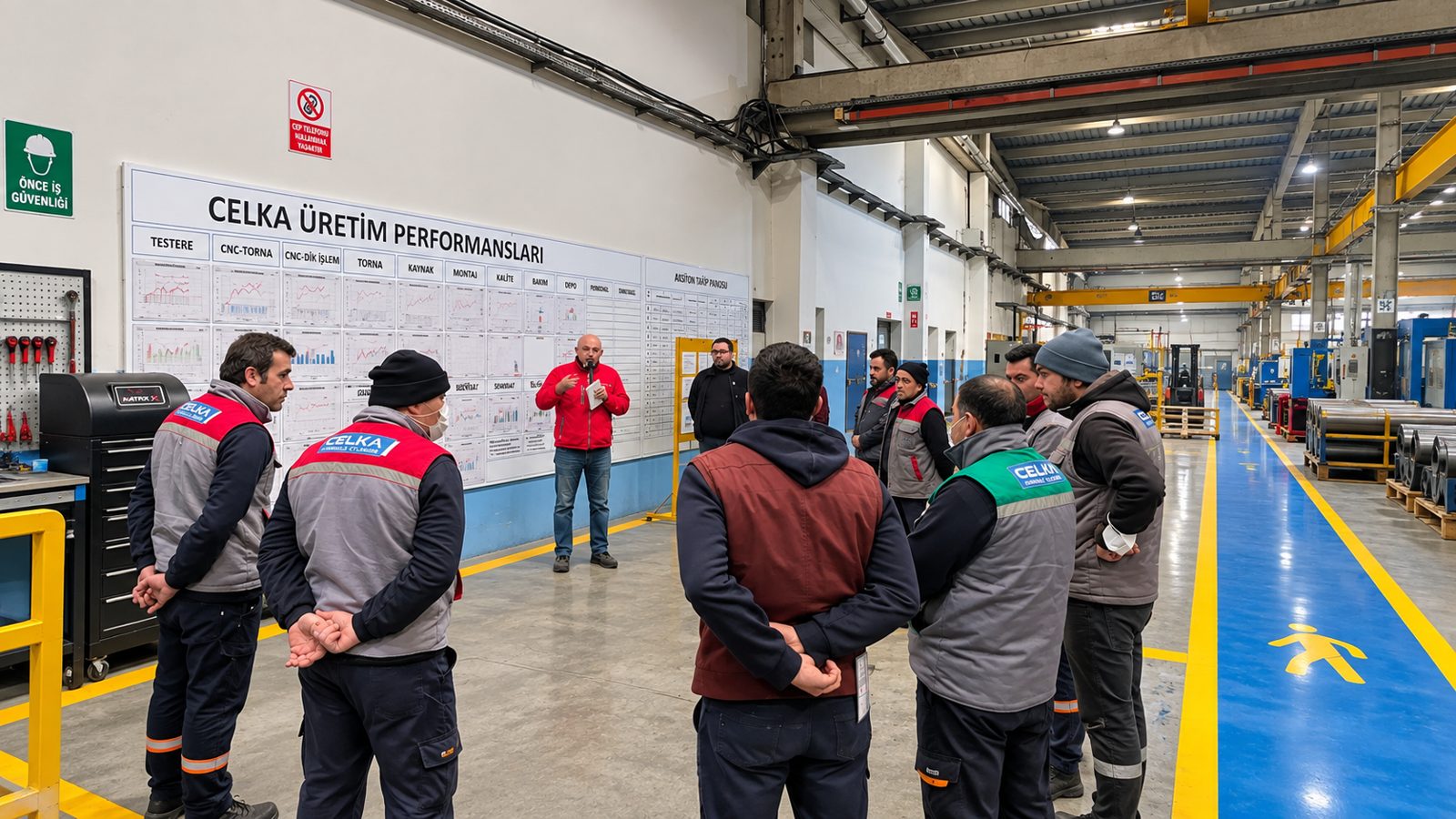
Another type is visual management tools aimed at tracking performance and targets. Daily production boards, KPI tables and target-versus-actual comparisons are considered in this scope. These boards help teams take ownership of performance.
There are also visual management tools focused on problem solving. A3 boards, action tracking tables and kaizen corners are important examples that support a culture of continuous improvement. All of these tools form the basic building blocks of the visual factory.
Why Is Visual Management Important in Business?
In business, visual management provides operational clarity by reducing complexity. No matter how complex processes are, the right visualization can make them understandable to everyone. This is a major advantage, especially in businesses with multiple shifts and large teams.
Visual management minimizes miscommunication. Verbal instructions or long procedures can be interpreted differently by different people. Visuals create a common reference point.
It also shortens the onboarding time of new employees. Defining processes and expectations visually significantly flattens the learning curve. This contributes to the business in terms of both time and quality.
How to Implement Visual Management: A Step-by-Step Approach
Before starting visual management, the first step is to analyze the current situation. It should be clarified which information is not visible on the floor and which problems are noticed late. This analysis helps in choosing the right tools.
In the second step, standards are defined. What each indicator means and the meaning of colors and symbols must be clearly defined. Otherwise, visuals can create confusion instead of providing information.
The final step is sustainability. Visual management boards and tools should be updated regularly and made into living systems. Unused or outdated visuals damage the credibility of the system.
Visual Management Examples
One of the most common visual management examples on production floors is production line performance boards. Daily targets, actual output quantities and reasons for stoppages are clearly displayed on these boards.
In warehouse and logistics areas, floor lines and color codes stand out. Material locations and pedestrian and forklift routes are visually separated to increase safety and efficiency.
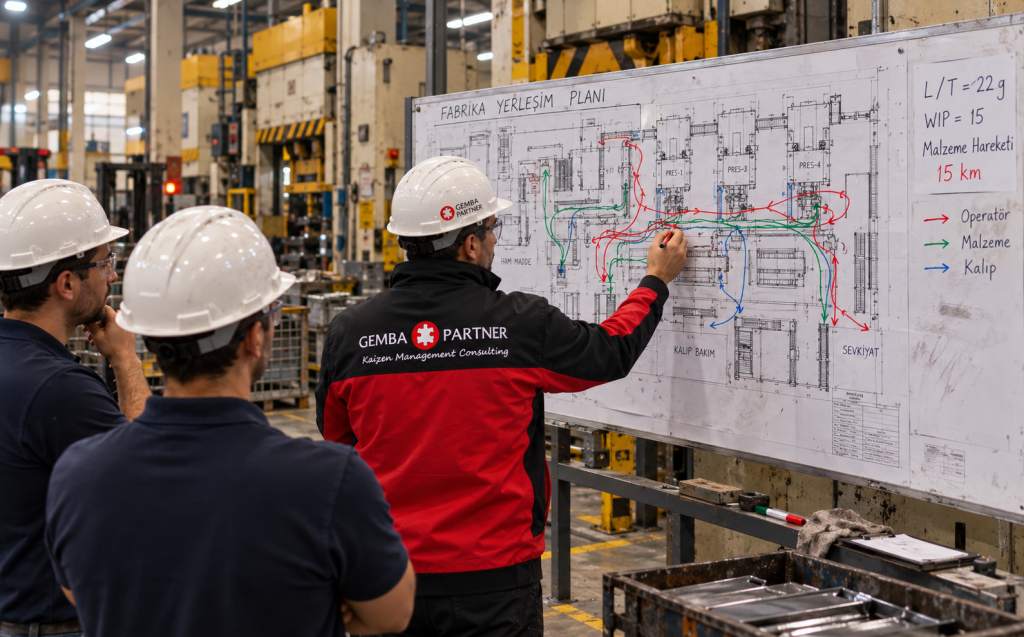
Visual management can also be applied in office environments. Process flow diagrams, workload boards and project tracking tables enable knowledge workers to work with lean principles as well.
How Does Visual Management Improve Performance?
Visual management affects performance improvement directly, not indirectly. When goals are visible, teams act more consciously to reach them. Because deviations are noticed early, corrective actions are not delayed.
Making performance data visible to everyone also creates a healthy sense of ownership. While successes become visible, areas for improvement also become clear. This transparency strengthens motivation and team spirit.
In the long run, visual management feeds the habit of continuous improvement. Making even small gains visible helps spread a kaizen culture.
Common Mistakes in Visual Management
The most common mistake in visual management is over-visualization. Boards containing too much information create chaos, the opposite of their purpose. Simplicity is essential in visual management.
Another mistake is not keeping visuals up to date. Boards that lose their currency soon start being ignored by employees. This damages trust in the system.
Not involving floor employees in the process is also a major mistake. Visual management is not a practice imposed from the top down; it is a system that must be designed together.
Visual Management and Digitalization: New-Generation Approaches
With digitalization, the understanding of visual management is also evolving. Digital boards go beyond classic boards by offering real-time data flow and remote access. This is a major advantage, especially for multi-site businesses.
Visual management applications become more dynamic thanks to digital platforms. Data is updated automatically, manual errors decrease and analytical depth increases.
However, digitalization does not replace basic visual management principles. On the contrary, it should be seen as a tool that strengthens them. If not designed properly, digital solutions can also create complexity.
Our Visual Management Approach at Gemba Partner
At Gemba Partner, we see visual management as the most tangible reflection of lean thinking on the floor. Our goal is to help businesses build simple, sustainable visual management systems suited to their own realities.
In our approach, observations made on the floor and employee feedback come before ready-made templates. We aim for visual management tools to be truly usable and value-creating structures.
We see visual management not as a project but as a cultural transformation. That is why our practices are addressed holistically, with a digitalization and continuous improvement perspective.