What Is Digital Workshop Management? Productivity and Control in Production

What Is Digital Workshop Management? Productivity and Control in Production
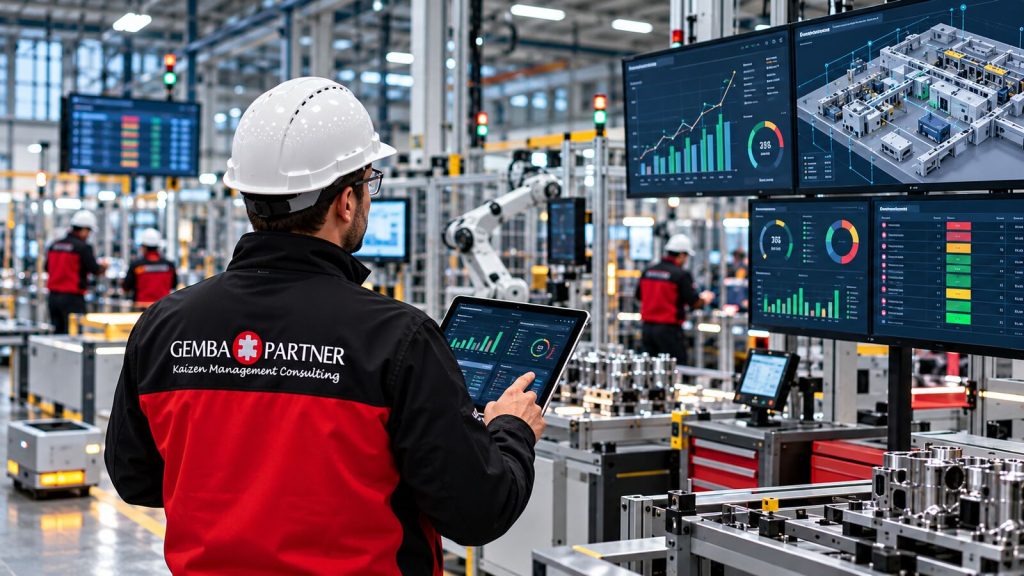
With the Industry 4.0 transformation, production floors have stopped being merely physical spaces where machines run and have turned into dynamic ecosystems where data is processed. At the center of this transformation, digital workshop managementhas become the most powerful weapon of modern companies that want to optimize production processes and bring the margin of error close to zero.
As Gembapartner, in this guide we will detail the opportunities offered by digitalized production floors and the impact of these systems on productivity.
What Does Digital Workshop Management Mean?
Digital workshop managementis the real-time monitoring, analysis and optimization of all operations in a production facility (people, machines, materials and information flow) through digital tools, sensors and software. This system turns raw data from the production floor into meaningful information and presents it to decision-makers.
It is not just a software package but an end-to-end transparency model that replaces paper-based tracking systems. Every step, from the moment raw material enters until the finished product leaves, leaves a digital trail.
Differences Between Traditional Workshop Management and Digital Workshop Management
In traditional methods, data is usually noted on paper at the end of shifts, entered manually into Excel sheets and takes days to analyze. This delays intervention when a problem occurs.
In digital workshop management, the process is as follows:
-
Speed: Data is instant. When a machine stops, the system reports it within seconds.
-
Accuracy: The human error factor in manual data entry disappears.
-
Transparency: The status of production can be followed not only from the office but even remotely.
-
Predictability: While traditional methods look to the past, digital systems (thanks to predictive analytics) can foresee failures that may occur in the future.
Which Processes Does Digital Workshop Management Cover?
A digital workshop ecosystem touches every layer of production:
-
Production Planning and Scheduling: Assigning orders to machines in the most efficient way according to capacity.
-
Operator Management: Competence-based tracking of employees and delivering work instructions through digital screens.
-
Quality Control: Instant quality control during production with sensors or digital measuring instruments.
-
Maintenance Management: Autonomous and predictive maintenance processes based on machine data rather than breakdown maintenance.
-
Inventory and Logistics: Real-time tracking of work-in-process and material flow with RFID or barcode systems.
Benefits of Digital Workshop Management for Businesses
Companies investing in this system quickly reach the level of operational excellence:
-
Increase in OEE (Overall Equipment Effectiveness): Machine efficiency increases through shorter downtime and optimized cycle times.
-
Reduction in Defective Production: Thanks to instant monitoring, when a defective part is produced the process is stopped immediately, preventing thousands of defective products.
-
Cost Savings: Paper waste ends, energy efficiency is achieved and labor costs are better managed.
-
Fast Decision-Making: Managers set strategy based on real “data,” not on “guesses.”
Key Tools and Systems Used in Digital Workshop Management
For digitalization to happen, some core components need to work together:
-
MES (Manufacturing Execution System): Also known as manufacturing execution systems, this software is the brain of the workshop.
-
IIoT (Industrial Internet of Things): Sensors and communication protocols that collect data from machines.
-
Cloud Computing and Big Data: The areas where the huge amount of collected data is stored and analyzed.
-
Digital Boards (Andon Systems): Visual management tools on the production floor that everyone can see, showing the instant status.
The Place of Digital Workshop Management in the Lean Manufacturing Approach
Lean manufacturing focuses on eliminating waste. Digitalization multiplies the impact of lean techniques. For example, a traditional Kanban card can get lost, but a digital Kanban system never makes a mistake.
The “paperless production” vision perfects the lean principles of “Standard Work” and “Visual Management.” Digital workshop management makes it impossible for waste (Muda) to hide by making visible what happens at the Gemba(where the work is done).
How Should the Transition to Digital Workshop Management Be Planned?
Moving to full digitalization overnight is difficult and risky. An ideal plan should include the following steps:
-
Analysis: Determining existing processes and the digital maturity level.
-
Scoping: Deciding which bottleneck needs to be solved first.
-
Pilot Implementation: Testing the system on a specific production line.
-
Integration: Making the MES system talk to the existing ERP (Enterprise Resource Planning).
-
Training: Developing the skills of operators and managers on the shop floor in using digital tools.
Which Companies Need Digital Workshop Management?
It is generally thought that only large automotive factories need this system, but this is a misconception.
-
Companies producing a wide variety of products (SKUs),
-
The food and pharmaceutical industries where traceability is critical,
-
Machine manufacturers with complex assembly processes,
-
SMEs of every size in intense competition with narrowing margins must increase their productivity with digital workshop management.
How Is Sustainable Productivity Achieved with Digital Workshop Management?
Productivity is not a one-time success but a sustainable discipline. Digital systems automate the PDCA (Plan-Do-Check-Act) cycle. The system prevents discipline from breaking down by sending automatic alerts when there is a deviation from target. This sustainability allows the company to remain flexible even in times of crisis.
Digital Workshop Management with the Gemba Partner Approach
As Gemba Partner, we do not see digitalization merely as a technological installation. In our approach, technology must be in harmony with people and process .
While determining the most suitable digital workshop management strategy for you, we analyze your real needs on the shop floor, blend lean manufacturing principles with digital tools and guide you in building a sustainable ecosystem. Instead of complex systems, we focus on value-creating solutions that your employees can adapt to easily.
Getting professional support to prepare your production floor for the future and eliminate productivity loss with digital transparency is the most critical step for the success of the transformation.