What Is Kanban? The Kanban Management System
What Is Kanban?
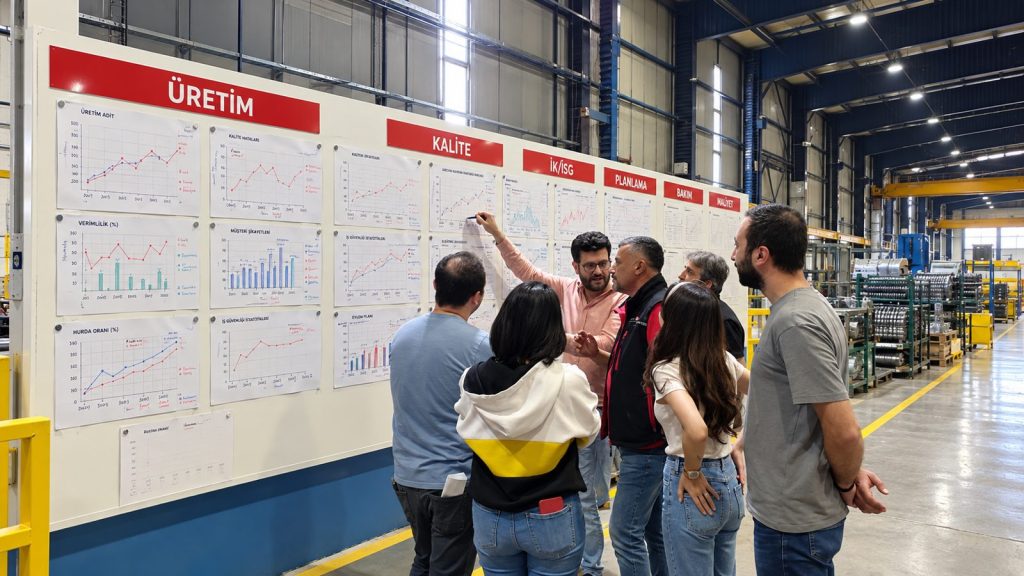
In modern business, speed and efficiency are no longer options but basic requirements for survival. One of the biggest problems in managing work processes is that the current state of the work is “invisible.” The name of the system that removes this invisibility, makes workflow continuous like a river and is one of the strongest tools of the lean management philosophy is Kanban.
As Gembapartner, we cover in full detail this visual management system that has revolutionized every field from manufacturing to software, from the service sector to personal productivity.
How Did the Kanban System Emerge?
Kanban, is a Japanese word meaning “signal card” or “visual board.” The system was developed in the late 1940s by Toyota’s legendary engineer Taiichi Ohno . Ohno was inspired by supermarket shelf management when designing this system.
In supermarkets, when customers take a product from the shelf, the empty space acts as a “signal” for staff to replenish that product. Adapting this logic to the production line, Ohno created the “Pull System”, in which the previous process does not produce parts unless the next process needs them. This revolutionary step minimized inventory costs and became the cornerstone of the Toyota Production System (TPS).
Core Principles of Kanban
Kanban is not just a board or a collection of colored cards; it is a management discipline built on four core principles:
-
Visualize the Workflow: Make the steps of the work and the status of each work item visual so everyone understands the process in the same way.
-
Limit Work in Progress (WIP): Starting too many things at once lowers efficiency. Increase focus by limiting the number of work items entering the system.
-
Manage the Flow: Monitor how long work items take to move from one stage to another (Lead Time) and identify bottlenecks.
-
Continuous Improvement (Kaizen): Continuously review the system in small steps and use experimental methods to increase the team’s productivity.
What Is a Kanban Board and How Does It Work?
A Kanban boardconsists of columns representing the workflow and cards representing each piece of work (Kanban cards). In its simplest form, a board includes these three columns:
-
To Do: Work that has not yet started.
-
In Progress: Active work currently being worked on.
-
Done: Work that is complete and has created value.
Cards move from left to right according to the status of the work. This simple movement lets the team instantly see capacity, bottlenecks and priorities. In modern practice these columns can be detailed with specific process steps such as “Analysis,” “Test” and “Approval.”
Why Do Businesses Use Kanban?
In an organization that applies Kanban, change is felt immediately. The reasons businesses prefer this system are:
-
Flexibility: Kanban focuses on immediate demands instead of rigid, predetermined plans. As priorities change, the order of cards can be easily updated.
-
Transparency: The question “who is working on what” disappears. Everyone can see the entire flow.
-
Waste Reduction: Overproduction and unnecessary waiting are prevented. Only as much production/service as needed is provided.
-
Fast Delivery: Because bottlenecks in the workflow are resolved quickly, the time for a product to reach the customer (Lead Time) shortens.
Differences Between Kanban and Scrum
Kanban and Scrum, the two giants that come to mind when we talk about Agile methods, are often confused. The main differences are:
| Feature | Scrum | Kanban |
| Time Frame | Fixed-length cycles (Sprints) | Continuous Flow |
| Roles | Defined roles (Scrum Master, Product Owner) | No requirement for specific roles |
| Change | Change is not recommended during a sprint | Change can be made at any time |
| Metrics | Velocity | Cycle Time |
What to Watch for in Kanban Implementation
Those who see Kanban as just sticking cards on a board generally fail. For a successful implementation, pay attention to the following:
-
Sticking to WIP Limits: If you don’t set a limit on the “In Progress” column, the system becomes just a “to-do list” and flow stops.
-
Standard Work: The “Definition of Done” for each stage must be clear.
-
Regular Meetings: Daily stand-up meetings are critical for removing obstacles in the flow.
Kanban’s Impact on Manufacturing, Service and Office Processes
-
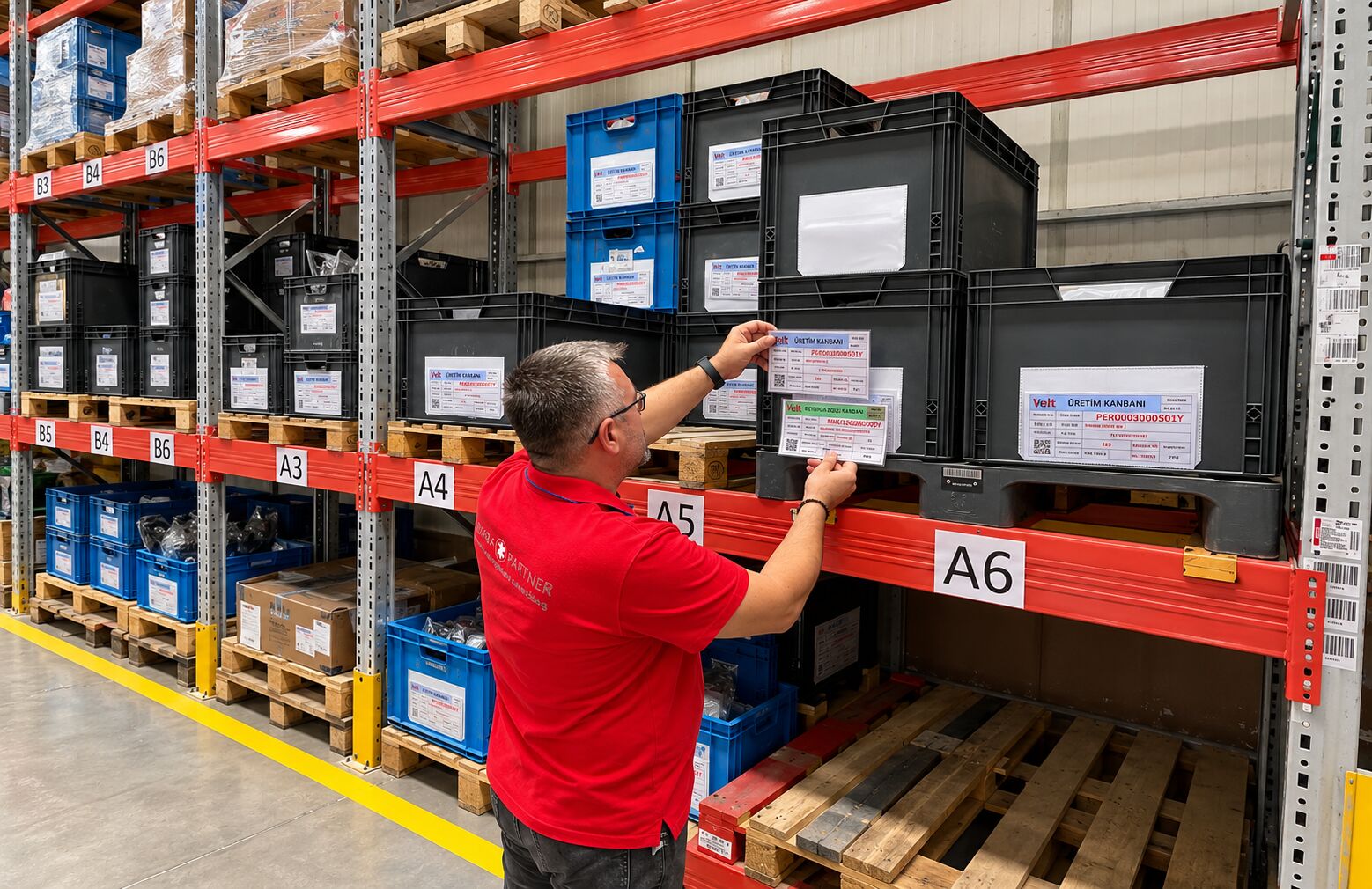
In Manufacturing: Prevents material shortages, automates inventory management and prevents overproduction.
-
In the Service Sector: Ensures correct prioritization of customer requests (e.g. order tracking in a restaurant or patient flow in a hospital).
-
In Office Processes: Prevents bureaucratic delays by making invisible work such as purchasing approvals, HR processes or marketing campaigns visible.
Kanban’s Role in Digital Transformation Processes
In the Industry 4.0 world, physical Kanban cards are giving way to digital systems (E-Kanban). Digital Kanban enables instant analysis of data, teams in different geographies working on the same board and integration with ERP systems. As Gembapartner, we consider using Kanban as a data source in the digitalization process strategic because it accelerates decision-making mechanisms.
How Does Kanban Support a Continuous Improvement Culture?
A Kanban board is actually a “problem diagnosis” tool. If work piles up in a column (a bottleneck), that is the point where improvement is needed. This visual evidence prevents teams from blaming each other and shifts the focus from “finding the culprit” to “improving the process” (Kaizen).
How to Start with Kanban
You don’t need huge software investments to start the Kanban journey:
-
Draw the Current State: Reflect your work on a board as it is right now.
-
Set WIP Limits: Set column limits according to the team’s capacity.
-
Observe: Watch where cards get stuck.
-
Evolve: Change the board as the process changes.
Why Is Kanban a Strategic Approach for Modern Businesses?
Markets are unpredictable today. Kanban gives businesses “Agility” amid this uncertainty. Instead of making big plans and staying clumsy, quickly completing small work packages and delivering value to the customer is the key to sustainable profitability. Beyond a management system, Kanban is a discipline that keeps a business’s pulse and keeps it in shape.
Kanban is a mirror that turns chaos into order and uncertainty into transparency. To see how fluid your workflow is and eliminate waste, this system will be your strongest ally.