What Is a Model Factory? The Pilot Area Approach in Lean Transformation
What is a model factory (model line)? Pilot area selection in lean transformation, implementation steps, benefits and rollout method. A Gemba Partner guide.
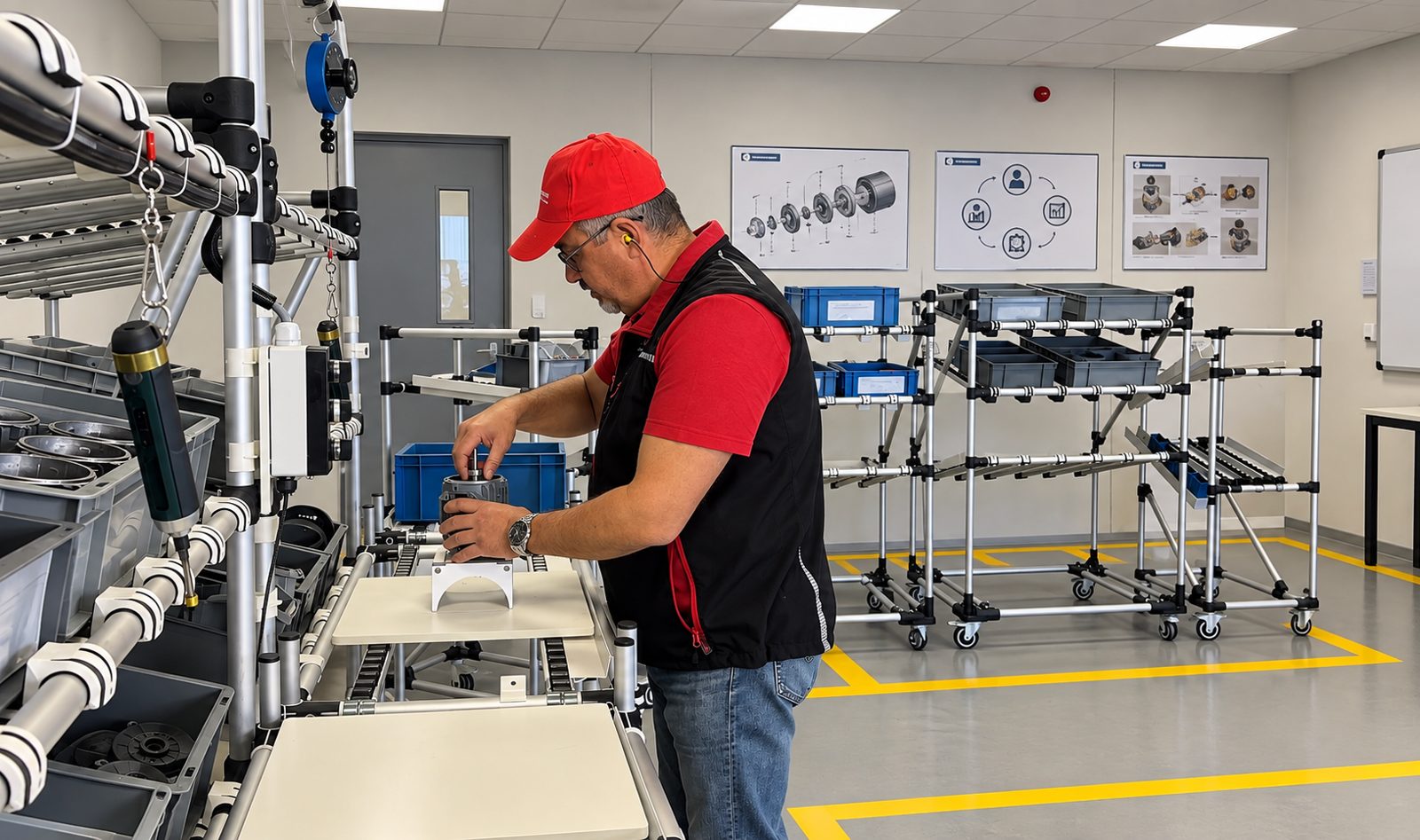
Short answer: A model factory (model line or model area) is a pilot approach in lean transformation in which all tools and methods are first applied end to end in a single limited area, results are demonstrated and what is learned is rolled out to other areas. The aim is to build confidence and momentum for the transformation by creating a proven reference.
Introduction
Lean transformation programs often face the same problem: they start everywhere at once, resources are scattered and no area achieves lasting results. Teams ask “would it work for us too?” and management finds it hard to keep supporting without seeing concrete proof.
The model factory approach solves this problem by fully applying lean methods in a small but comprehensive area. In this article, we cover what a model factory is, how to select the pilot area, the implementation steps and the rollout phase. For the general framework of transformation, you can also read our article what is lean transformation .
The Logic of the Model Factory Approach
A model factory is a living reference where lean principles are applied in an integrated way on a single line, cell or product family. Instead of scattered improvements, methods such as 5S, visual management, standard work, flow and daily management are run together in the same area. This way it becomes concrete how the methods support each other and what results they deliver under the company’s own conditions.
In many places, the term “model factory” is also used to mean a learning factory, that is, a training environment where employees learn by applying lean methods. The two approaches complement each other: the pilot area is both an implementation and a learning area.
How Do You Select the Pilot Area?
- Must be visible and meaningful: Success should be in an area that will be noticed in the company and touch business results.
- Must be of a controllable size: An area that is too large scatters resources in the first attempt.
- Must have an owner and support: The area owner should be motivated and top management support should be clear.
- Must be measurable: Baseline values (lead time, inventory, defect rate, OEE) should be measurable.
- Must be representative: What is learned should be applicable to other areas.
Model Factory Implementation Steps
- Measure the current state. Map the value stream and set baseline indicators. See value stream map.
- Define the target state. Clearly write the flow, inventory, time and quality targets.
- Build the foundations. Organize the area with 5S and visual management, create standard work.
- Improve the flow. Reduce waste with methods such as pull systems, quick changeover (SMED) and cell layout. See kanban.
- Start daily management. Establish the rhythm with a board, a short daily meeting and action follow-up.
- Make results visible. Share before-and-after indicators and open the area to visits from other teams.
Rollout: From the Model Area to the Whole Facility
The real value of the model factory is the spread of what is learned. People trained in the pilot area become leaders and trainers of other areas. Standards and implementation guides are documented and gradually transferred to new areas. During rollout, since each area’s conditions are different, the pilot should be adapted rather than copied one to one.
- Train “internal trainers” from the pilot team.
- Organize visit and sharing days.
- Prioritize the rollout plan and set targets for each area.
- Audit areas regularly to ensure gains are sustained.
Common Mistakes
- Starting with an area that is too large
- Applying only tools and neglecting daily management and measurement
- Using the pilot as a “showcase” without making a rollout plan
- Not involving employees in the process
- Declaring success without measuring results
Target Indicators for a Model Factory
A model factory is not a “nice-looking area” but a learning area that produces measurable results. Targets must be set numerically before starting.
| Indicator | Example Target | Measurement Frequency |
|---|---|---|
| Lead time | 30–50% reduction | Weekly |
| Work-in-process (WIP) | 40% reduction | Daily |
| First-time-through quality | 98% and above | Daily |
| Labor time per unit | 15–25% improvement | Weekly |
The Role of Management
The success of a model factory depends largely on top management being visible on the shop floor. Managers visit the area regularly, solve problems together with the team and share results across the company. When management’s attention fades, the model area risks turning into an exhibition space.
12-Week Implementation Plan
- Weeks 1–2: Area selection, team setup and current-state measurement.
- Weeks 3–4: Value stream map and identification of losses.
- Weeks 5–8: 5S, standard work, flow and pull system implementations.
- Weeks 9–10: Setting up visual management and the daily management system.
- Weeks 11–12: Measuring results, standardization and rollout plan.
Conclusion
The model factory moves transformation from a topic of debate to a proven result. With a well-selected pilot area, measurable targets, integrated method application and planned rollout, it creates a success story in the company’s own language. The real goal is not a single nice area but the capacity to learn and spread.
At Gemba Partner, we carry out model area work together with teams on the shop floor. For details, see our lean manufacturing consulting page or contact us.
Frequently Asked Questions
What is a model factory?
It is a pilot approach in which lean methods are applied end to end in a single line or area, results are demonstrated and what is learned is rolled out to other areas.
Why is a model factory necessary?
It is necessary to build confidence and momentum for the transformation, focus resources on a single area and create proof under the company’s own conditions.
How is the pilot area selected?
An area is preferred that is visible, of a controllable size, supported by top management, measurable and representative of the business.
How long does a model factory take?
The duration varies by the size of the area and the starting situation. What matters is managing the pilot process with measurable targets and tying the results to the rollout plan.
What is the difference between a model factory and a pilot implementation?
A pilot implementation usually tests a single technique. A model factory applies multiple lean tools together to create a visible reference and learning area for the company.
Which area should be chosen for a model factory?
A line with high visibility, clear product flow and measurable improvement potential is ideal. Instead of the most problematic or most critical area, an area of medium complexity where success can be proven is preferred.