What Is Shop Floor Management (SFM)?
What is Shop Floor Management (SFM)? A guide to managing losses at the source with visual management, daily meetings and kaizen.
Under today’s global competitive pressure, it is not enough for companies to simply produce good products to survive; on the operational excellence journey, they must produce every day with fewer resources, in less time and at higher quality. One of the key tools of the lean manufacturing philosophy that forms the foundation for achieving these goals is Shop Floor Management (SFM).
In this article, we examine step by step what SFM is, how it works with visual management and daily meetings, its relationship with kaizen and the added value it provides to businesses.
What Is Shop Floor Management (SFM)?
SFM is based on the principle of managing processes transparently at the Gemba (the shop floor, the real place) where production takes place, detecting problems instantly and sustaining a cycle of continuous improvement (kaizen) with team involvement. SFM is not just a management technique; it is a lean leadership and culture model that spreads process ownership and problem-solving capability down to the lowest levels. For companies that want to strengthen the role on the shop floor, our field management and development system is the hands-on counterpart of this approach.
Shop floor management is the day-to-day working part of a lean management system. Lean manufacturing techniques such as 5S, kanban, standard work and visual management can be applied individually on the shop floor; but the framework that ensures these techniques are sustained is shop floor management.
Visual Management and Rapid Action
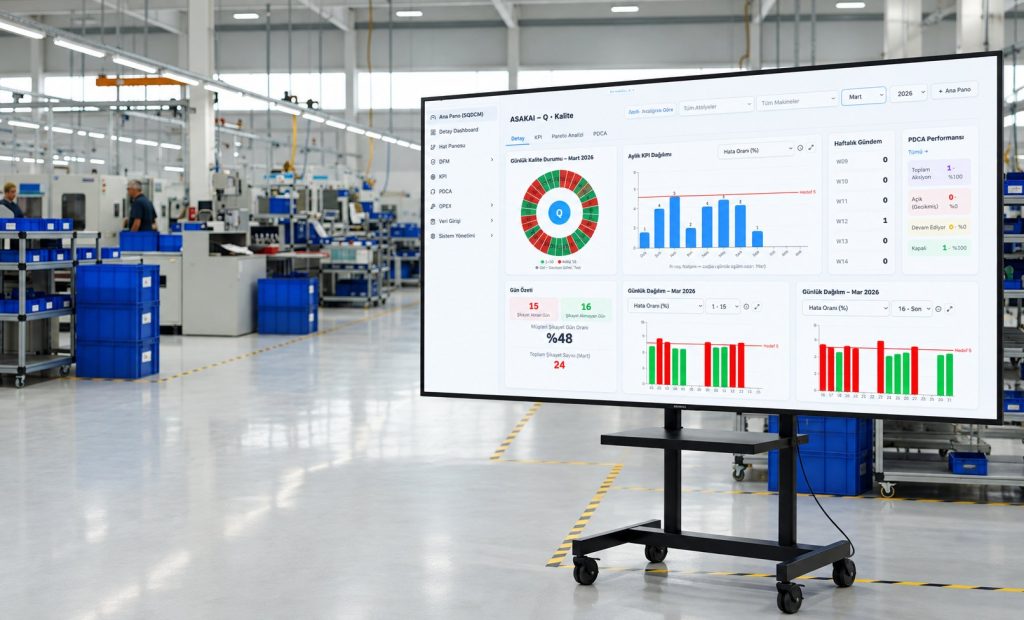
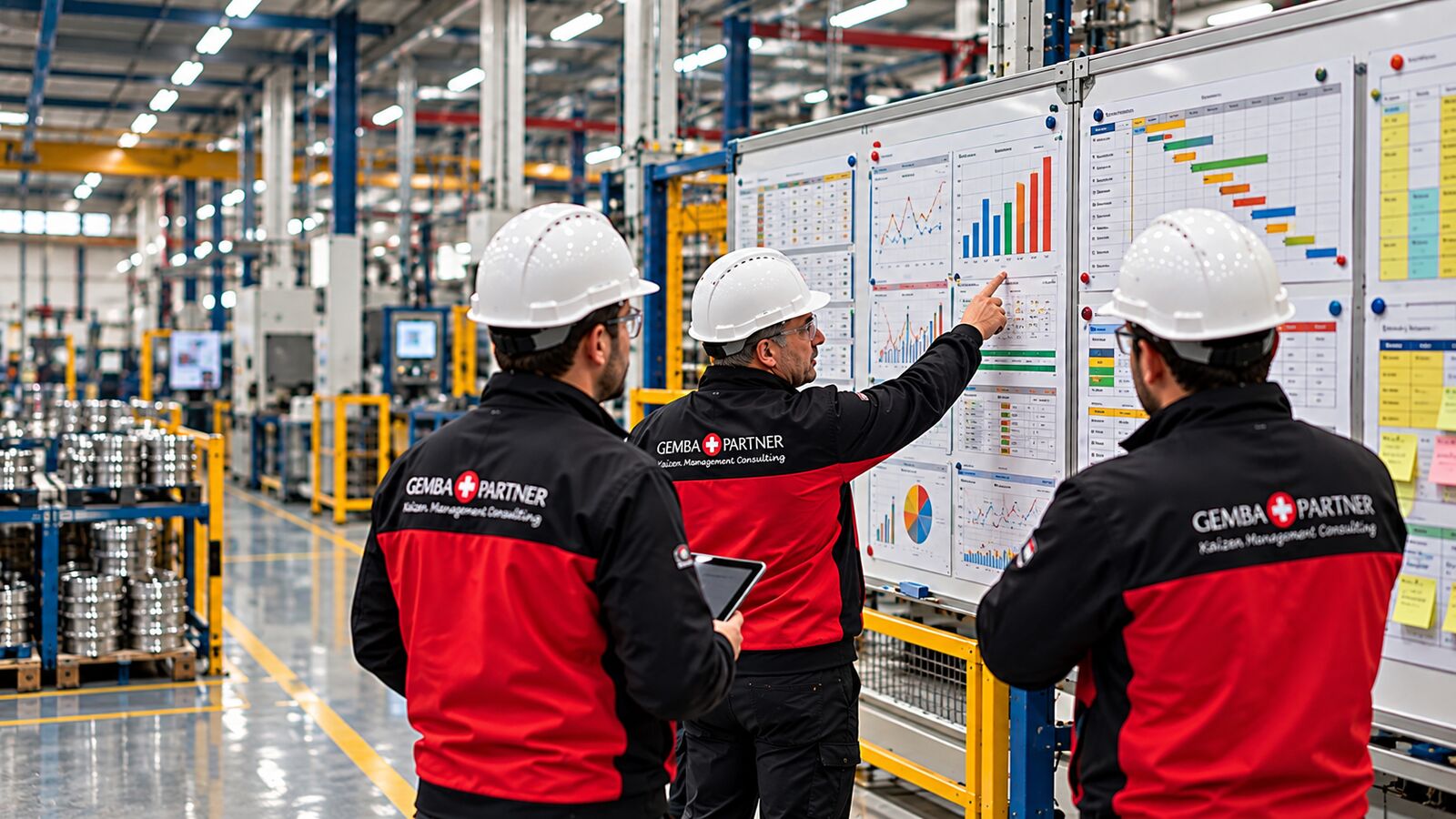
Visual management is an inseparable part of SFM. Using large boards, color-coded indicators and graphical presentations, current performance (SQCDM: Safety, Quality, Cost, Delivery, Morale) is displayed transparently against targets. Thanks to this transparency:
Instant deviation detection: Operators and managers see deviations from target (losses) immediately, stop being reactive and can take proactive action.
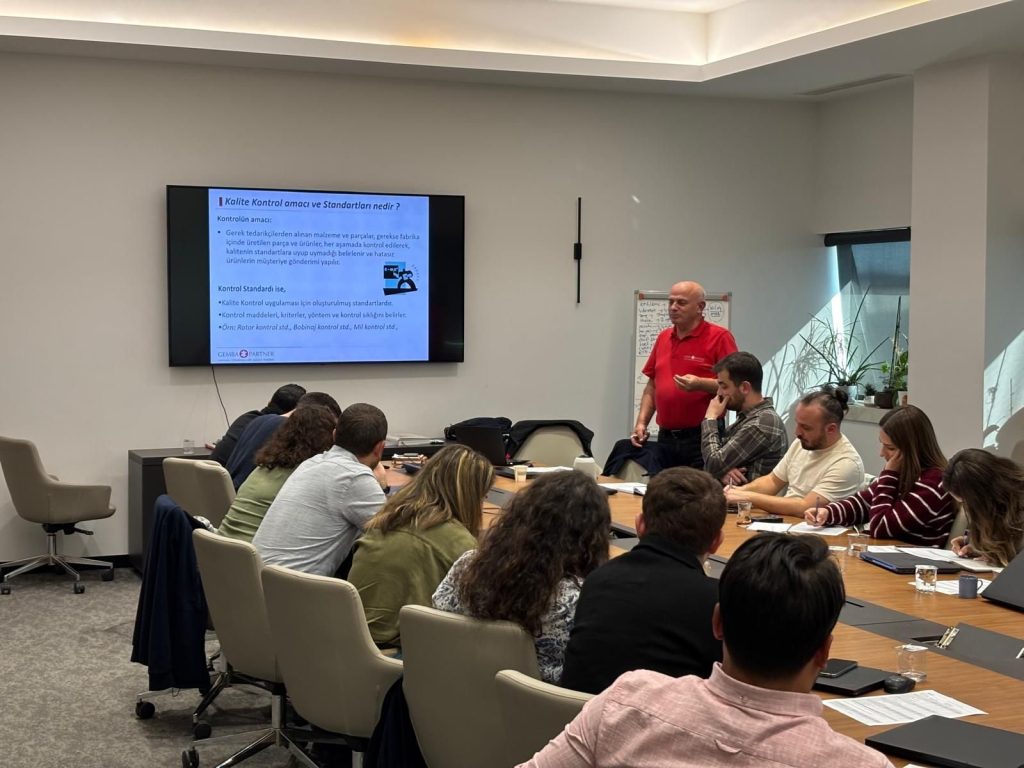
Rapid intervention: Short, standardized meetings held on the shop floor (Asakai or shift-start meetings) allow the causes of losses to be discussed, root causes to be reached and the problem-solving process to start right away.
Kaizen and Continuous Loss Management
SFM manages losses in two main ways:
Daily operations management: Short-term, immediate problems (for example yesterday’s machine breakdown) are addressed with daily rituals such as Asakai, and temporary countermeasures (poka-yoke, standard revision) are determined.
Permanent improvement: Recurring or high-impact losses are moved to a separate tracking system as kaizen activities. SFM provides the culture and structure needed to manage these problems systematically with problem-solving tools such as 5 Whys and fishbone diagrams and the PDCA (Plan-Do-Check-Act) cycle. This way, losses are not solved temporarily but eliminated permanently from the system. To develop this skill in your teams, you can use our problem-solving coaching programs.
The Added Value SFM Brings to Companies
Companies that implement SFM successfully gain not only productivity improvements but also a long-term, sustainable competitive advantage.
Productivity and cost advantage: By minimizing losses (breakdowns, defects, waiting), OEE (Overall Equipment Effectiveness) rises. Production with less waste means optimized unit costs.
Cultural transformation and shop floor leadership: SFM instills the idea that the Gemba is where decisions are made and problems are solved. It ensures everyone from the operator to the team leader takes ownership of the process and develops shop floor leadership competencies. Employees become active problem solvers rather than passive implementers.
Standardization and predictability: Daily management rituals and visual standards standardize the way work is done. Processes become more transparent and predictable, which increases quality and delivery reliability.
Sustainable kaizen culture: SFM turns kaizen from a special project into part of the daily way of working. Visual boards keep improvement topics constantly on the agenda.
Shop Floor Management with Digital Tools
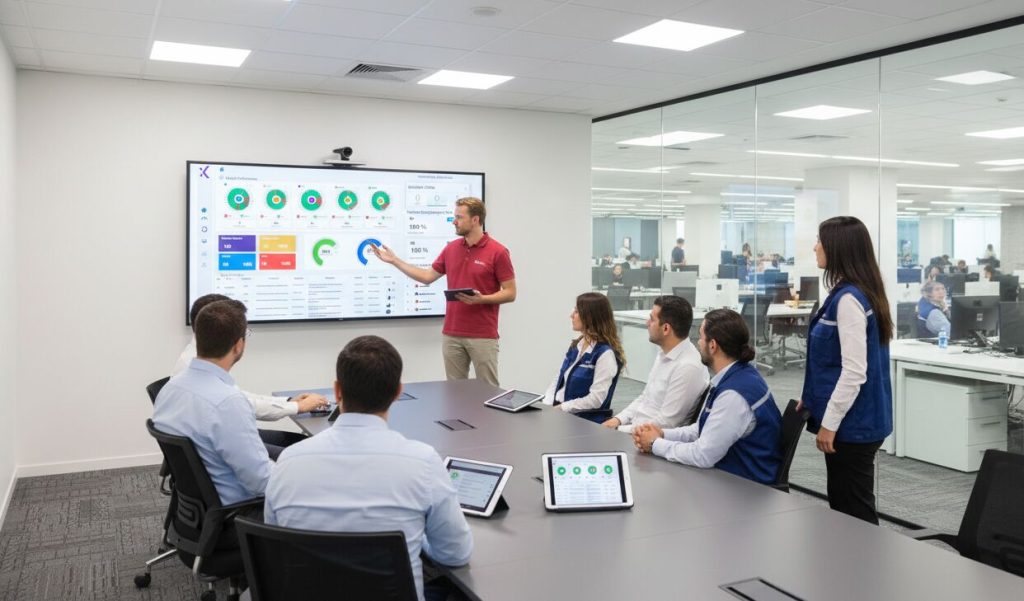
Keeping boards and meeting data in a digital environment reduces the data collection burden and makes action follow-up easier. With you can take your SFM practice to digital shop floor management.
Conclusion
Shop Floor Management is an indispensable part of the lean manufacturing philosophy that detects losses at the source, encourages leadership at the Gemba and offers a systematic problem-solving mechanism. SFM not only manages today’s losses but also lays the groundwork for tomorrow’s operational excellence.
To set up a shop floor management system in your factory, get in touch with us.