Transitioning to Lean Management in Office Processes
Lean thinking is usually associated with production lines; yet a significant portion of the time it takes an order to reach the customer is spent in the office: order entry, approvals, planning, purchasing, invoicing, reporting. If a company has reduced waste on the shop floor but its office processes are not lean, part of the gain is lost at the desk.
In this article, we discuss why transitioning to lean management in office processes is necessary, what waste looks like in the office and what path can be followed. For the general framework of lean management, you can also read our article why companies should transition to lean management
What Does Waste Look Like in Office Processes?
Waste in office work is not as visible as in production, because inventory is stored as waiting e-mails and files. The classic seven wastes appear in the office in these forms:
- Waiting: documents waiting for approval, e-mails waiting for a reply.
- Overprocessing: unnecessary approval steps, entering the same data in multiple places.
- Defects and rework: incomplete or incorrectly filled forms, correction rounds.
- Overproduction: reports nobody reads, presentations more detailed than necessary.
- Inventory: accumulated workload, unfinished requests.
- Unnecessary motion: searching for documents and information, switching between multiple systems.
- Unnecessary transport: passing information from hand to hand needlessly.
1. Map the Value Stream of the Office Process
Value stream mapping can be applied to office processes as well. Map the steps an order or request goes through from start to finish, with the processing time and waiting time at each step. You will often find that most of the total time is waiting.
2. Make the Work Visible
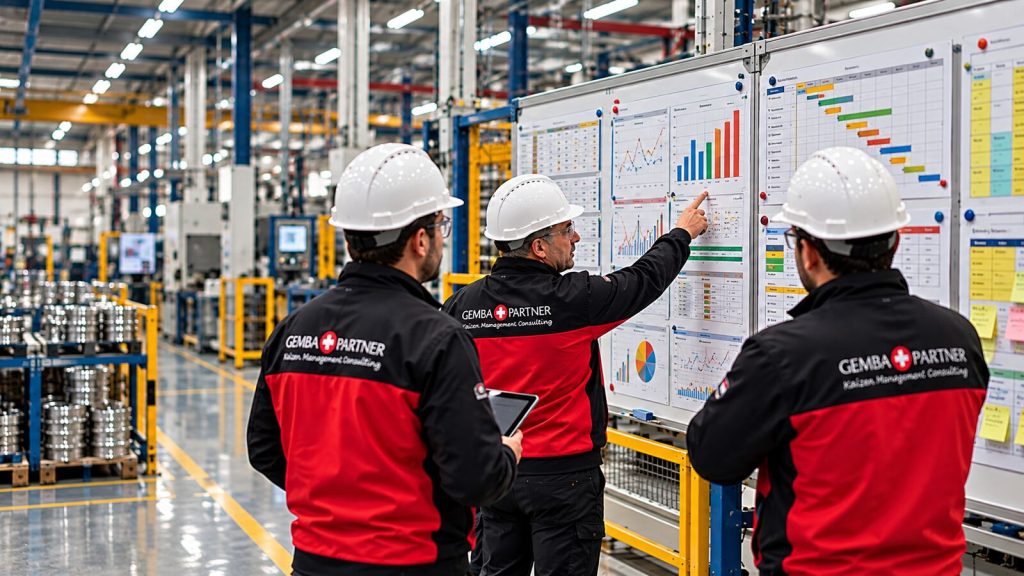
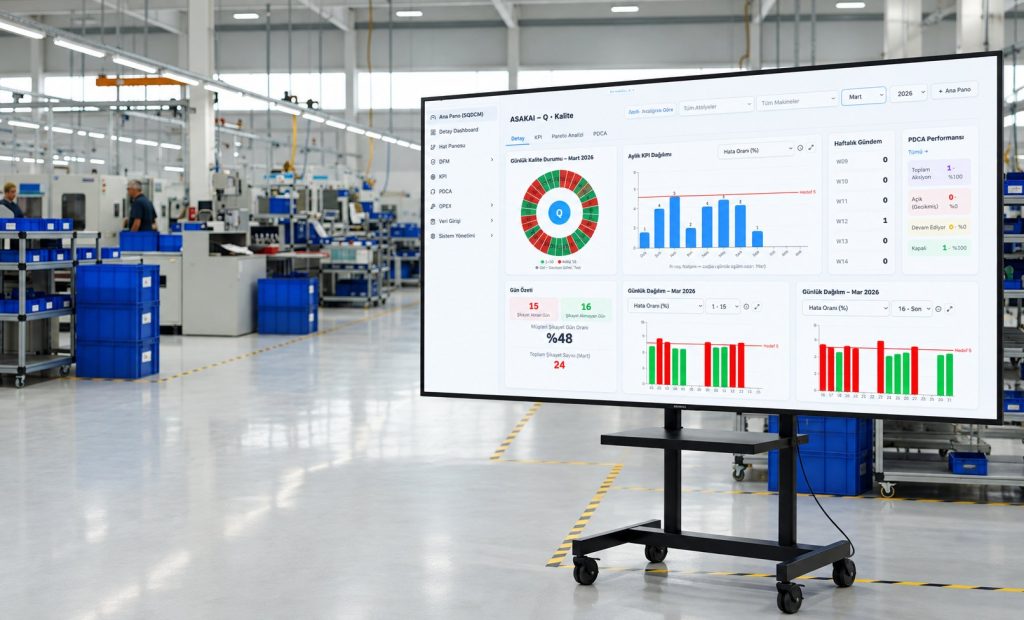
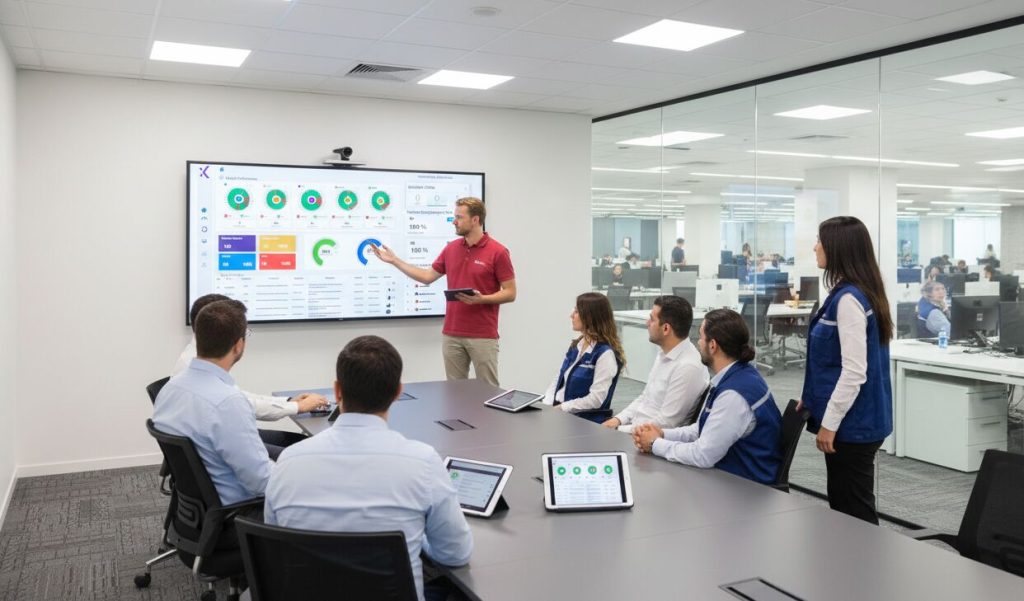
Office work is invisible; that is why it piles up and gets lost. Visual management boards, kanban boards and short daily meetings show everyone the workload, priorities and bottlenecks. Visual management and kanban also work well in office teams.
3. Establish Order with Standard Work and 5S
When the same job is done differently by different people, it creates errors and uncertainty. Create standard work definitions, form templates and checklists for frequent tasks. In the office, 5S applies not only to physical files but also to digital folder structure, naming and e-mail organization.
4. Speed Up the Flow, Reduce Approvals
Review unnecessary approval steps; distinguish which approval truly reduces risk and which only creates delay. Running work in small batches and with a continuous-flow logic rather than in large batches reduces waiting time.
5. Problem Solving and Continuous Improvement
Get office teams used to solving problems with methods such as 5 Whys, A3 and PDCA. Lean management is built on the manager asking “why” and the team coming up with solutions. To develop this capability, you can look at our leader development program and problem-solving coaching
When Should Digital Tools Come In?
If office processes are digitized before they are made lean, the chaos speeds up. First simplify the process, then automate it with digital tools. Our article digital transformation in companies without a lean culture can guide you on this.
Conclusion
Transitioning to lean management in office processes complements the gains in production and speeds up the entire chain from order to invoice. The safest way is to start with a pilot in a small office process and measure the results. To build your lean transformation roadmap together, see our lean consulting service or get in touch with us.