What Is Autonomous Maintenance? The Operator-Based Maintenance Approach in TPM
What is autonomous maintenance (Jishu Hozen)? The purpose of operator-based maintenance in TPM, its 7 steps, benefits and what to watch for in implementation. A Gemba Partner guide.
Short answer: Autonomous maintenance (Jishu Hozen) is one of the core components of TPM. It has the operator who uses the machine take ownership of basic maintenance tasks such as cleaning, lubrication, visual inspection and simple adjustments. This way, failures are noticed early, the maintenance team focuses on more critical work and equipment effectiveness (OEE) increases.
Introduction
In many factories, maintenance is seen as the job of the maintenance department alone. The operator runs the machine and calls the maintenance team when a breakdown occurs. Yet the operator is the person who sees the equipment most closely every day. They are also the first to notice a change in vibration, sound, leakage or heating.
Autonomous maintenance turns this knowledge into a systematic maintenance approach. In Japanese, jishu hozen (自主保全) means “self-maintenance.” In this article, we cover what autonomous maintenance is, its place within TPM, its seven steps and the challenges encountered in implementation. For the general framework, you can also see our TPM consulting page.
Where Does Autonomous Maintenance Fit in TPM?
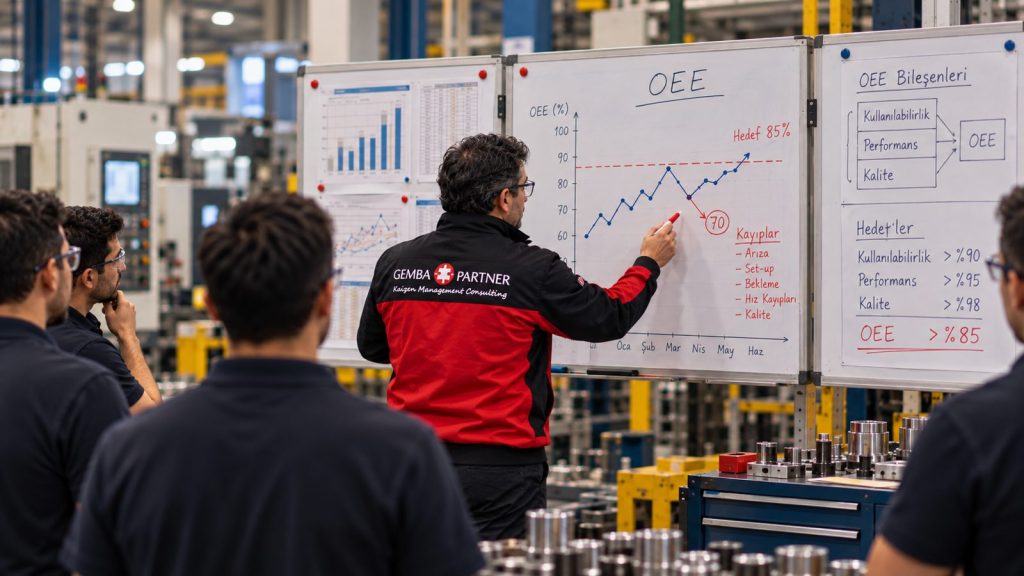
TPM (Total Productive Maintenance) consists of mutually supporting activities aimed at driving equipment losses toward zero. Autonomous maintenance is one of them and runs together with planned maintenance, focused improvement, quality maintenance, training and safety activities. The measure of equipment performance, OEE, is a frequently used indicator for tracking the success of autonomous maintenance.
Autonomous maintenance does not replace the maintenance department. It redefines the division of work: the operator takes on basic maintenance and observation, while the maintenance team focuses on work requiring expertise such as planned maintenance, advanced diagnostics and improvement.
Benefits of Autonomous Maintenance
- Early detection: Small abnormalities are noticed before they turn into failures.
- Reduced forced deterioration: When cleaning, lubrication and tightening are done regularly, wear slows down.
- Ownership: The operator sees the machine as “my machine,” and operating errors decrease.
- Saves time for the maintenance team: Simple tasks move to the shop floor and specialists focus on planned work.
- Occupational safety: Risks from leaks, loose connections and contamination become visible.
The 7 Steps of Autonomous Maintenance
Autonomous maintenance is generally implemented in seven steps, gradually, starting with a pilot machine or line:
| Step | Content | Purpose |
|---|---|---|
| 1. Initial cleaning and inspection | Completely clean the machine and tag abnormalities | Reveal hidden defects |
| 2. Address sources of contamination and hard-to-reach places | Reduce the source of contamination and make cleaning easier | Shorten cleaning time |
| 3. Cleaning, lubrication and inspection standards | Create simple standards that can be applied during the day | Spread correct practice |
| 4. General inspection training | Give operators equipment knowledge and inspection skills | Increase technical competence |
| 5. Autonomous inspection | Operators apply the checklists | Make regular inspection a habit |
| 6. Standardization | Standardize the shop floor and workflow (integrated with 5S) | Sustainability |
| 7. Full autonomous management | The operator independently manages and improves their own area | Complete ownership |
Steps 1 and 2 largely overlap with 5S implementation. Autonomous maintenance cannot be sustained for long in a disorganized and dirty area. For 5S work, see our 5S consulting and training service page.
Common Challenges in Implementation
- Resistance: The operator may say “this isn’t my job.” The transition is hard without training and management support.
- Lack of time: Maintenance activities cannot be implemented if they are not in the production plan. Maintenance time should be included in the shift plan.
- Standards not sustained: After the initial cleaning, checklists are forgotten. Regular auditing and leadership attention are needed.
- Unclear division of work with the maintenance team: What the operator will and will not do should be defined in writing.
Where to Start?
- Start a pilot by selecting a critical line or machine.
- Do the initial cleaning with the operators and tag the abnormalities found.
- Track the closure of tags together with the maintenance team.
- Create simple standards and checklists.
- Track OEE and unplanned downtime as success indicators.
- When the pilot succeeds, spread it to other areas.
Cleaning, Lubrication, Inspection and Tightening (CLIT) Checklist for Autonomous Maintenance
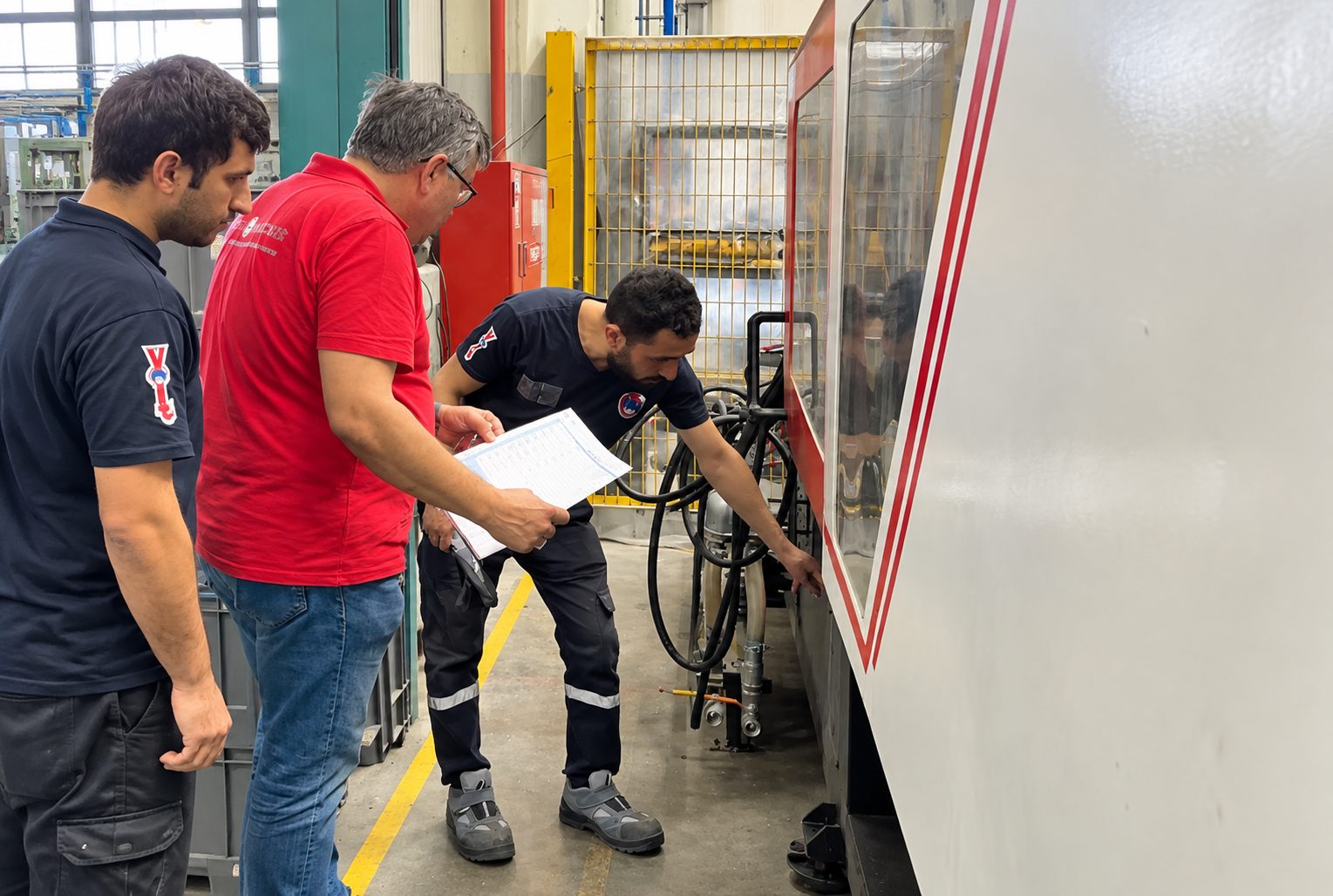
The first step of autonomous maintenance is for the operator to get to know their own machine. The most practical tool for this is a short CLIT checklist applied at the start or end of the shift. The list shows with photos which point of the machine will be cleaned, which points will be lubricated, what will be inspected by sight and touch and which connections will be tightened. The goal is not to turn the operator into a maintenance technician but to make them an eye that notices abnormalities early.
- Cleaning: Points where chips, oil, dust and product residue accumulate are marked; discoveries made during cleaning are recorded.
- Lubrication: The type, amount and interval of lubricant are made visible on the machine with a label.
- Inspection: Simple “normal / abnormal” criteria are defined for signs such as sound, vibration, heat and leaks.
- Tightening: Marking (line paint) is used for loosening bolts, belts and connections.
Abnormality Tagging: Making the Problem Visible
Every abnormality found during autonomous maintenance is marked on the machine with a tag. Problems the operator can solve (loose screw, dirty sensor) are closed in the shift they are tagged; problems requiring the maintenance team’s intervention are turned into a work order with a separate-colored tag. The tag board shows at a glance how many abnormalities are open on which machine and forms the main agenda of weekly meetings.
Division of Work Between the Operator and the Maintenance Team
| Activity | Operator | Maintenance Team |
|---|---|---|
| Daily cleaning and inspection | Responsible | Prepares standards, trains |
| Simple lubrication and tightening | Responsible | Determines interval and method |
| Detecting and tagging abnormalities | Responsible | Evaluates tags |
| Part replacement and repair | Supports | Responsible |
| Periodic and preventive maintenance | Is informed | Responsible |
Success Indicators in Autonomous Maintenance
The impact of the work is tracked with a few simple indicators: OEE (overall equipment effectiveness), mean time between failures (MTBF), mean time to repair (MTTR) and number of open abnormalities. These indicators are not expected to be perfect at the start; the trend is what matters. A decrease in failure-related downtime and a faster closure rate of tags show that the system is taking hold.
Conclusion
Autonomous maintenance turns the operator from a user outside the process into the owner of the equipment. Success comes not from a one-time cleaning but from standardized daily habits. Implementations that start in a pilot area and progress step by step, with management support and a clear division of work with the maintenance team, deliver lasting results.
At Gemba Partner, we carry out TPM and autonomous maintenance work together with teams on the shop floor. To adapt the process to your facility, get in touch with us.
Frequently Asked Questions
What is autonomous maintenance?
Autonomous maintenance (Jishu Hozen) is the TPM approach in which the operator takes on basic maintenance tasks for their machine such as cleaning, lubrication, visual inspection and simple adjustments.
How many steps does autonomous maintenance have?
It generally consists of seven steps: initial cleaning, addressing contamination sources, creating standards, general inspection training, autonomous inspection, standardization and full autonomous management.
Does autonomous maintenance replace the maintenance department?
No. The operator takes on basic maintenance and observation, while the maintenance team focuses on planned maintenance and work requiring expertise. The division of work is redefined.
How is the success of autonomous maintenance measured?
It can be tracked with indicators such as OEE, unplanned downtime, failure frequency and the closure rate of abnormality tags.
Why should operators do autonomous maintenance?
The person who sees and runs the machine every day is the first to notice change. When the operator takes on basic cleaning and inspection, small problems are caught before they turn into failures and the maintenance team focuses on work requiring expertise.
How long does autonomous maintenance take to deliver results?
On a pilot machine, first improvements are usually seen within a few weeks. Lasting behavior change and a drop in failure rate generally require 3–6 months of disciplined implementation.
How does autonomous maintenance relate to 5S?
5S prepares the ground for autonomous maintenance by creating an orderly and clean workplace. When cleaning also becomes an inspection activity, 5S evolves into autonomous maintenance.