Lean Production Techniques: 12 Core Methods and Order of Implementation
What are lean production techniques? 5S, VSM, kanban, SMED, TPM, poka-yoke and other core methods, and the order of implementation.
Lean production techniques are the set of methods used to reduce waste (muda) and strengthen the flow that adds value for the customer. Born from the Toyota Production System, these techniques are used today to improve efficiency and quality in many sectors, from automotive to food, from machinery to textiles. However, applying the techniques one by one is not enough; the result is determined by the order, purpose and measurement with which they are applied.
In this guide we summarize the 12 most-used lean production techniques, the problem each one solves, and a reasonable implementation order for businesses.
What Are Lean Production Techniques?
Lean production techniques serve three main purposes: organizing and standardizing the floor, balancing flow and demand, and preventing loss at the source. The 12 techniques below can be grouped according to these three purposes.
1. Floor Organization and Standardization: 5S, Visual Management, Standard Work
5S (sort, set in order, shine, standardize, sustain) is the starting point of every lean transformation, because no improvement lasts on a disorganized floor. Visual management ensures that deviations are instantly seen by everyone. Standard work is the writing down and making visible of the best known method.
2. Flow and Demand Balance: VSM, Takt, Kanban, Heijunka, Cellular Manufacturing
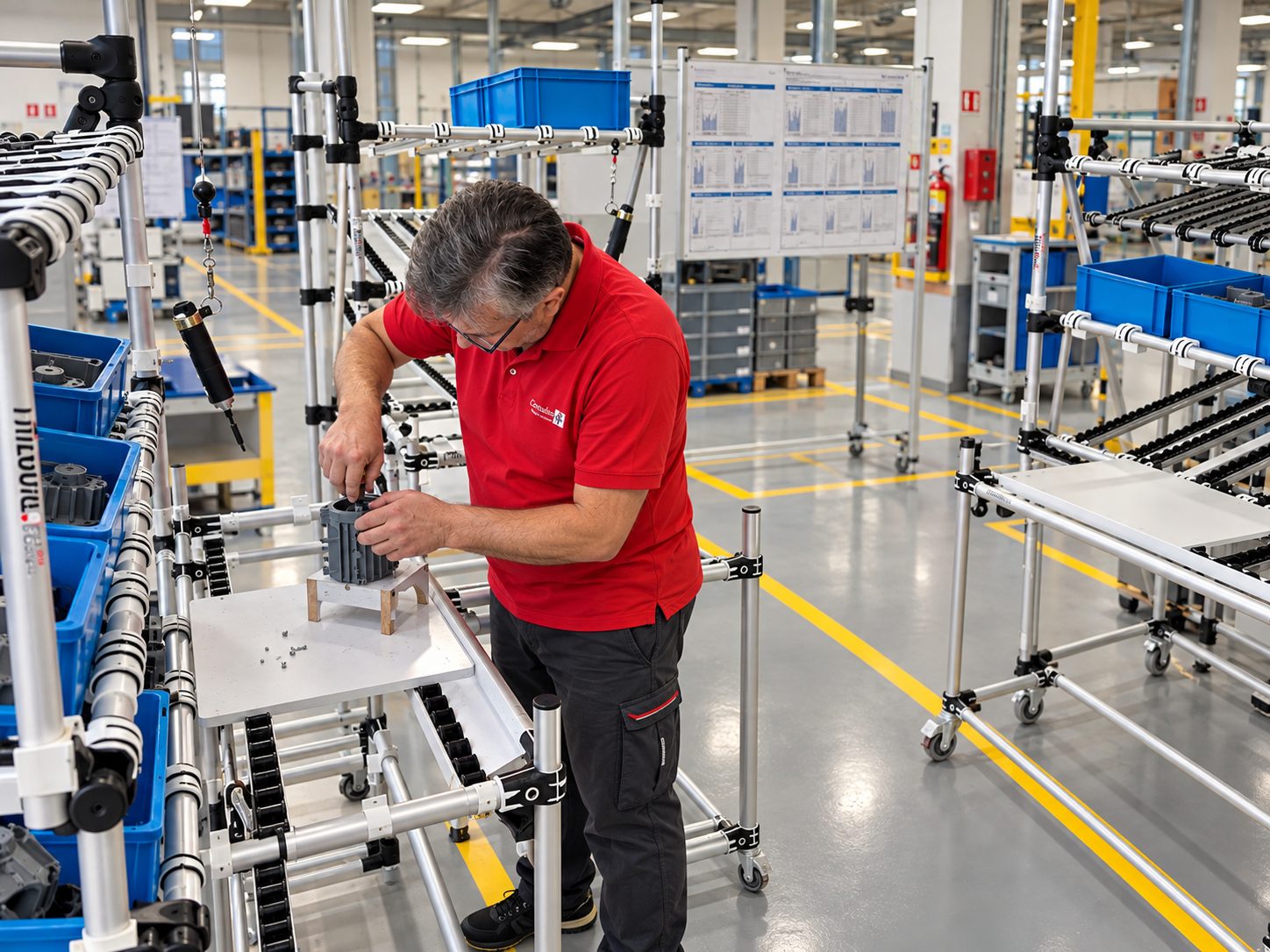
Value stream mapping (VSM), makes visible the waste in the product’s flow from raw material to customer. Takt time matches production pace to customer demand. Kanban is used to build a pull system and reduce intermediate stocks. Heijunka (production leveling) gently reflects fluctuations in demand in the production schedule. Cellular manufacturing places successive operations side by side, reducing transport and waiting.
3. Preventing Loss at the Source: SMED, TPM, Poka-Yoke, Jidoka
SMED shortens product changeover (set-up) times, making small-batch production possible. TPM (Total Productive Maintenance) reduces unplanned stoppages and equipment losses. Poka-yoke prevents errors from occurring by design. Jidoka is the principle that the line stops when an abnormality occurs so that the problem becomes visible.
4. Continuous Improvement: Kaizen and Problem Solving
Kaizen, is the culture that sustains all the techniques above. With 5 Whys, the fishbone diagram and the PDCA cycle, problems are solved down to the root cause; problem-solving coaching spreads this skill across the organization.
In What Order Should Lean Production Techniques Be Applied?
Every business’s situation is different, but a general order that works in practice is as follows:
- Measure the current state (OEE, FTT, lead time, WIP) and make waste visible with VSM.
- Organize the floor with 5S and visual management.
- Focus on the biggest sources of loss: SMED for changeover time, TPM for stoppages.
- Build flow: takt, cell layout and kanban.
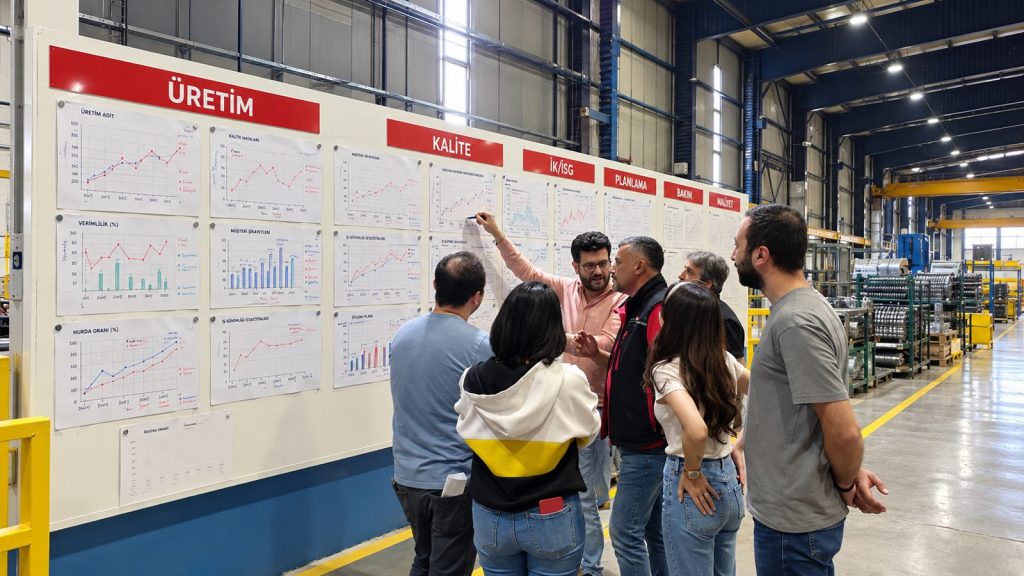
- Establish standard work and daily management (SQCDM boards, short meetings).
- Make the kaizen system and measurement continuous.
Common Mistakes
The most common mistake is applying the techniques randomly, like a toolbox. Setting up kanban before balancing flow, reducing stock before solving machine breakdowns, or saying “we became lean” without measuring are chief among these mistakes. The second common mistake is applying the techniques without building a sustainable management system; without lean management, techniques revert over time.
Conclusion
When applied in the right order, based on measurement and on the floor, lean production techniques improve efficiency, quality and delivery performance together. To build the right roadmap for your business together, see our lean production consulting page or get in touch with us. You can also find out where to start a lean transformation in our lean transformation guide as well.