The Most Common Mistakes in Lean Manufacturing Implementation
Common lean manufacturing mistakes: focusing on tools, weak management support, skipping standards, tracking the wrong indicators and more, and how to avoid them.
Short answer: The most common mistakes in lean manufacturing implementation are: focusing on tools instead of building a system, weak top-management support, leaving shop floor employees out, failing to sustain standards, tracking the wrong indicators, short-term cost pressure, starting everything at once, and neglecting cultural change.
Introduction
Many companies start lean manufacturing with great enthusiasm: 5S is carried out, boards go up, a few kaizen events are held. A few months later the work slows down and old habits return. The problem is usually not the methods, but how they are implemented.
In this article we cover the most common mistakes in lean manufacturing implementation and how to avoid them. For the general framework, you can also read our article what is lean production.
1. Focusing on Tools Instead of Building a System
Tools such as 5S, kanban and SMED are not lean production on their own. A tool should be chosen to solve a specific problem. A tool applied without knowing which problem it solves becomes a decorative exercise. Without a daily management, measurement and leadership system that connects the tools, the impact is short-lived.
2. Weak Top-Management Support
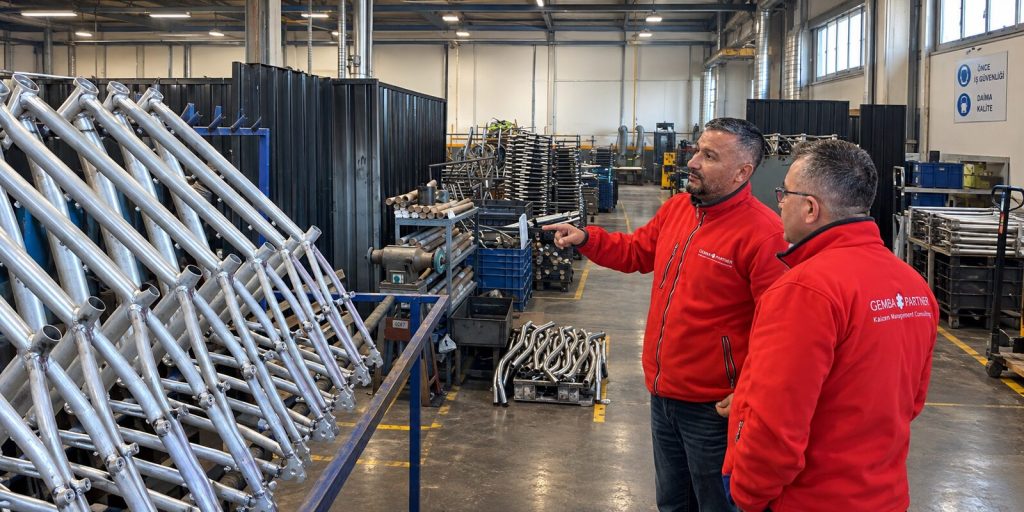
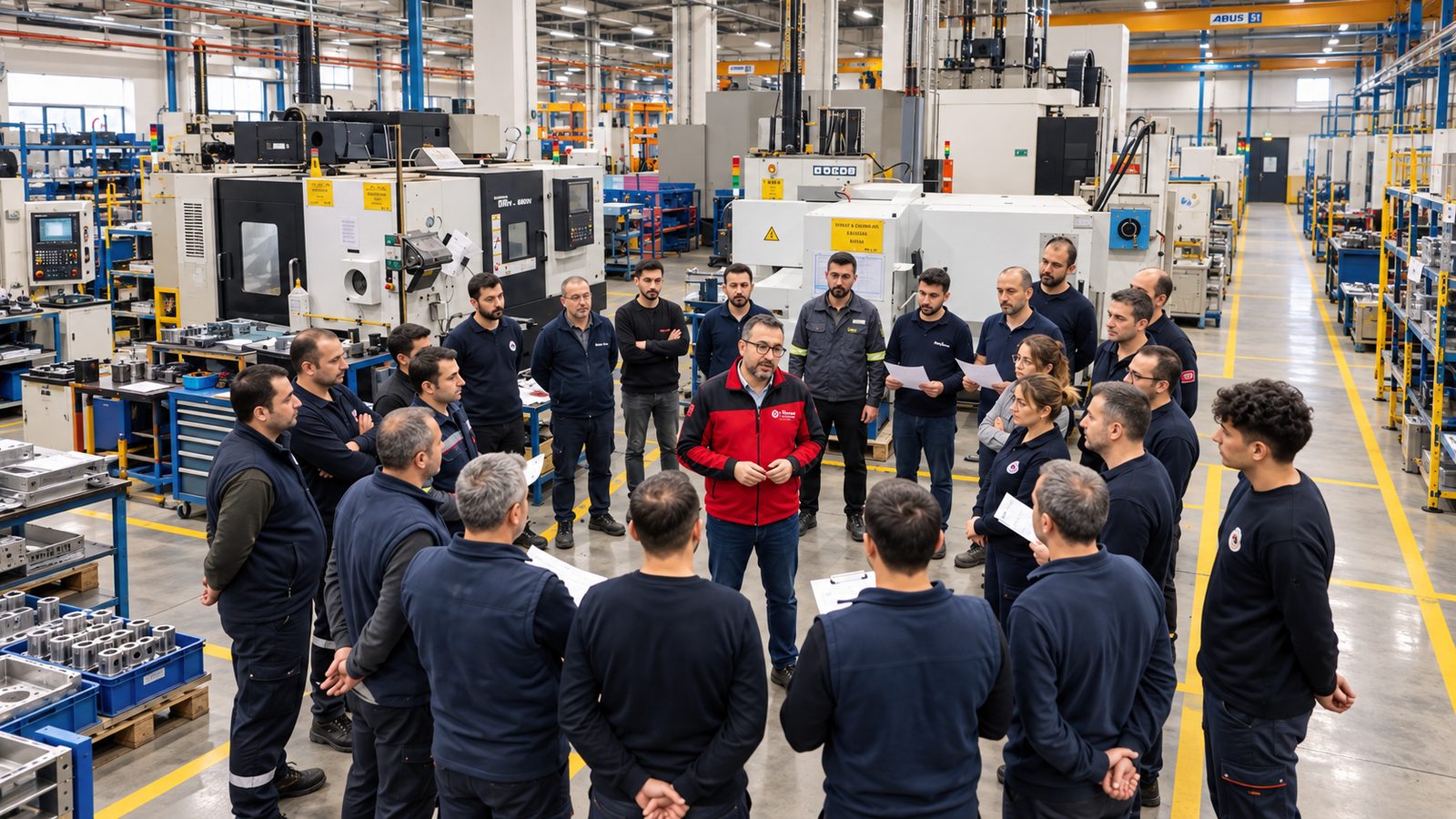
Lean transformation is not the job of a project team alone. When top management is not visible on the shop floor, does not allocate resources and does not set clear priorities, the program stalls. Managers who join gemba walks, follow the indicators and engage with problems send a powerful message.
3. Leaving Shop Floor Employees Out
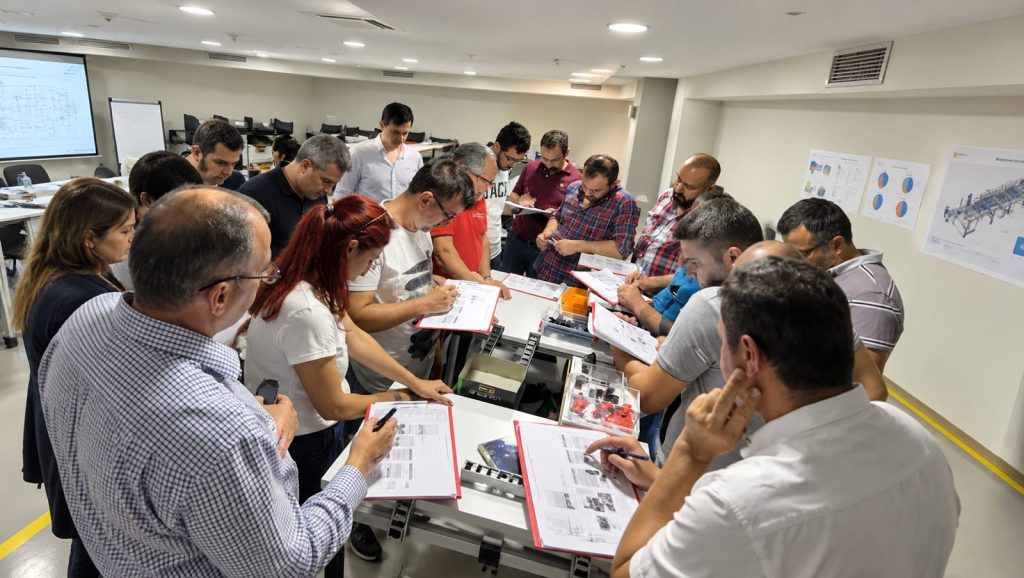
The person who knows the process best is the operator. When improvements are designed at a desk and imposed on the floor, resistance appears. Sustainability is far higher in structures where employees contribute ideas, try them out and take ownership of the results.
4. Setting Standards but Not Sustaining Them
At the end of every improvement, the new method should be standardized and audited regularly. Without a standard, the improvement depends on individuals. Without audits, the standard is forgotten over time. This is the most common reason basic practices such as 5S slip back so quickly. For sustaining 5S, see our 5S consulting and training service page.
5. Tracking the Wrong Indicators
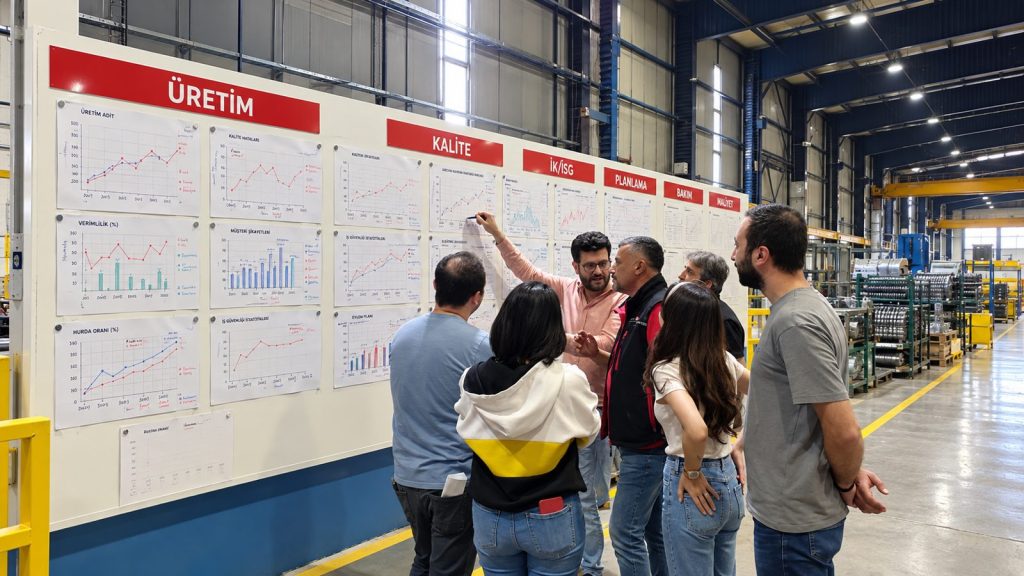
Measuring only output quantity hides flow and quality. You need indicators that track safety, quality, delivery, productivity and cost in a balanced way. Indicators must be easy to understand on the shop floor and tracked daily.
6. Short-Term Cost Pressure
Treating lean only as an instant cost-cutting tool destroys employee trust. If productivity gains are perceived as headcount reduction, improvement suggestions dry up. It is important for management to be clear from the start about how the gains will be used (growth, new business, reassignment).
7. Starting Everything at Once
Starting on all lines and with all tools at the same time spreads resources thin. Starting in a pilot area and moving forward with results is a more reliable path. See what is a model factory.
8. Neglecting Cultural Change
Lean production is not a set of methods; it is a way of thinking and managing. Without behavior changes such as making problems visible instead of hiding them, learning from mistakes instead of punishing them, and moving decisions closer to the shop floor, implementation stays superficial.
Early Warning Signs
Weakening lean work can usually be recognized by these signs: boards that are not updated, daily meetings that slip, standards that are not applied on the floor, and a drop in improvement suggestions. If these signs are noticed early, intervention is much easier.
Sustainability Checklist
- Does every improvement have an owner and a follow-up date?
- Do leaders walk the shop floor regularly?
- Are standards up to date and visible on the floor?
- Does training also cover new employees?
- Are successes and lessons learned shared?
Common Traits of Successful Companies
What companies that sustain lean transformation have in common is that they treat it not as a project but as their daily management style. Leadership, patience and consistency are the foundation of lasting results.
A 90-Day Roadmap
- First 30 days: Assess the current state and identify the priority losses.
- Days 31–60: Standard work, visual management and daily meetings in a pilot area.
- Days 61–90: Measurement, standardizing lessons learned and a roll-out plan.
The Cost of Lean Mistakes
Mistakes in lean implementation are not only lost time; they also erode employee trust. Starting a second time after a failed lean initiative is harder than the first, because a “this too shall pass” attitude settles in the team. That is why it is critical for the first implementation to be carried out in a well-chosen area, with clear targets and management support.
The Trap of the Tool-Driven Approach
Applying tools such as 5S, kanban or SMED without defining the problem is the most common mistake. Tools exist to eliminate specific losses; choosing a tool without knowing which loss costs the company the most scatters the effort. First map the value stream, then choose the tool that fits the biggest loss.
Lack of Measurement
A company that does not measure its gains cannot know whether lean works. Baseline values (lead time, WIP, defect rate, OEE) should be recorded and improvements reported against them. Measurement is the strongest tool for keeping management support alive.
Conclusion
The reason for failure in lean manufacturing is usually not the methods themselves but how they are implemented. Connecting tools to a system, making leadership visible on the shop floor, involving employees in the process and sustaining standards are the keys to lasting results.
At Gemba Partner, we run lean transformation work together with teams on the shop floor and aim for sustainable results. You can take a look at our lean project management page for our approach, or contact us.
Frequently Asked Questions
What is the most common mistake in lean manufacturing?
Focusing on tools and not connecting them to a management system is one of the most frequent mistakes. A tool applied without a clear problem to solve does not deliver lasting results.
Why does lean manufacturing fail in some companies?
Insufficient top-management support, not involving shop floor employees, not sustaining standards and neglecting cultural change are the main reasons.
Where should a lean transformation start?
It usually starts with measuring the current state in a selected pilot area, establishing basic order (5S) and launching daily management. Once results are visible, it is rolled out to other areas.
When are the results of lean manufacturing seen?
It depends on the condition of the area and the scope of implementation. Measurable improvements in pilot areas appear in a relatively short time, while cultural change is a longer process.
Why do lean transformations stall?
Declining top-management support, results that are not measured and change that does not take root in the culture are the most common reasons.
How do I know that lean is being sustained?
Up-to-date boards, closed actions and a continuing flow of improvement suggestions from the shop floor are strong indicators.
What is the biggest mistake in lean transformation?
Applying tools without defining the problem and management not being on the shop floor.
Can we start again if a lean initiative has failed?
Yes. It is possible to analyze the causes and restart with a smaller, measurable pilot and clear management ownership.