Is Labor Really Expensive? Non-Value-Added Costs
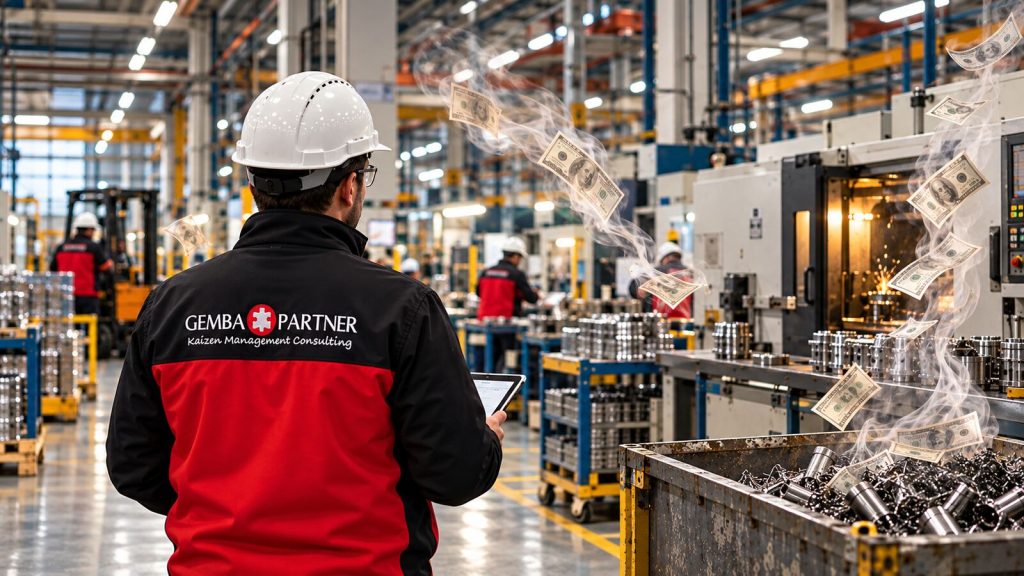
Is labor really expensive? Overtime, rework and non-value-added time: managing labor loss in production with a lean approach.

In the process analyses we have recently carried out across different sectors, we encounter a similar picture: labor costs are rising, but we do not sufficiently know where and how the labor resource is actually used. In this article, we discuss the relationship between labor cost, overtime and non-value-added time from a lean manufacturing and operational excellence (OPEX) perspective.
Overtime Does Not Always Mean a Capacity Need
Let’s say a factory works 100,000 hours of overtime per month. At first glance the problem is clear: capacity is insufficient and more workforce is needed. But is that really so? How much of these 100,000 hours went to value-added production that the customer pays for? How much was spent waiting for machines and materials? How many hours were lost to unplanned downtime? How much was used to rework defective products? How many hours turned into overtime due to poor planning, unbalanced workloads or low process efficiency?
If we do not know the answers to these questions, we also do not know whether the problem is really workforce capacity. Perhaps we do not need to work more, but to use existing working hours more correctly.
With a proper shop floor management approach, how existing capacity is being used should be questioned first. In a plant doing 100,000 hours of overtime per month, if there is also high unplanned downtime, low OEE, long set-up times, a high rework rate or material waiting in the same period, it would not be right to explain all of the overtime by demand growth. First we need to see this relationship:
Working hours → Lost time → Value-added time → Production output
Looking only at total working hours without measuring this chain prevents us from seeing the factory’s true efficiency.
We Must Talk About Labor Loss Before Labor Cost
Labor is a significant cost item in manufacturing companies. Wage increases, exchange rate and inflation balance, social costs and overtime expenses can directly affect companies’ competitiveness. However, evaluating labor cost only through the hourly wage makes us overlook an important point: what matters is not only how expensive one labor hour is, but what we produce in that hour.
An operator can be in the factory for eight hours. But not all of those eight hours may be used to produce value the customer pays for. If the operator is waiting for material, waiting for a machine to restart, searching for a product, doing unnecessary transport, reworking a defective product or working inefficiently due to poor planning, the company continues to pay the labor cost; but no new value is created from the customer’s perspective. Lean manufacturing makes a very fundamental distinction here: working time and value-added working time are not the same thing.
Digitalization Does Not Eliminate Loss
Today many companies collect far more data than in the past thanks to MES, ERP, BI systems and various digital production tools. This is an important development; but collecting data and managing loss are not the same thing. A factory digitally recording its downtime does not automatically reduce that downtime. Seeing OEE on a screen does not raise OEE. Reporting the amount of rework does not eliminate the cost of poor quality.
A digital system can show us where the problem is. What eliminates the root cause of the problem is, again, the management system, problem-solving discipline and kaizen activities. Therefore, digital transformation and operational excellence should not be alternatives to each other but two structures that complement each other. Data makes the problem visible; kaizen eliminates the problem. On this topic, you can also read our article lean manufacturing and digital transformation .
How Much Non-Value-Added Time Do We Load onto a Product?
In cost reduction efforts, one must look not only at total labor cost but also at the non-value-added time loaded onto the product. Alongside the operations that truly create value in a product’s production process, there may be time arising from waiting, transport, inspection, rework, machine downtime and unnecessary motion. All of this time ultimately creates a cost.
One of the fundamental goals of the Toyota Production System (TPS) and lean management is therefore to systematically reduce muda, that is, losses the customer does not want to pay for. A significant change in perspective is needed here. Besides the question “How many hours was this product produced in?”, we should also ask “How much of this time truly added value to the product?” The larger the gap between the two, the larger the non-value-added cost we load onto the product.
If You Don’t Know the Cost of Poor Quality, You Don’t Know the Real Labor Cost
Rework is one of the most striking examples of this. When we rework a defectively produced part, the operator works again, the machine is used again, energy is consumed again and production capacity is again allocated to the same product. From an accounting perspective, the employee may seem to be doing their normal job; from an operational perspective, we are trying to produce the same value a second time.
Therefore the cost of poor quality does not consist only of the value of scrapped material. Rework labor, machine capacity used, lost production time, additional inspection, logistics movements and delays are also parts of the real cost. Running a sustainable cost reduction program without making these costs visible is quite difficult.
Productivity: Not Working More, but Producing More Value
In lean manufacturing, productivity does not mean making people work faster. On the contrary, the aim is to eliminate non-value-added activities that consume employees’ time. Getting an operator to work ten hours instead of eight can increase output; but designing a process that can produce the same output in eight hours is far more valuable.
Therefore real productivity gains come from less waiting, less downtime, less rework, shorter set-ups, a more balanced workload and a higher ratio of value-added work. This is exactly the purpose of kaizen activities: not to make people work more, but to make processes work better.
Convert Operational Losses into Financial Results
In shop floor management, it is also not enough to track KPIs only as rates. 5% scrap. 65% OEE. 1,500 hours of rework. 8,000 hours of overtime. These indicators describe the state of the operation; but top management has one more question: what do these cost the company? One of the important tasks of an operational excellence system is to establish this connection between shop floor performance and financial performance.
- Measure the hours of downtime but also know its cost.
- Measure the rework rate but calculate the labor hours used.
- Track overtime but separate which operational losses it originates from.
- Measure OEE but also see the economic equivalent of the lost capacity.
Because from a management perspective, the real transformation begins when the financial impact of operational losses becomes visible.
We Need a New Question in Production Meetings
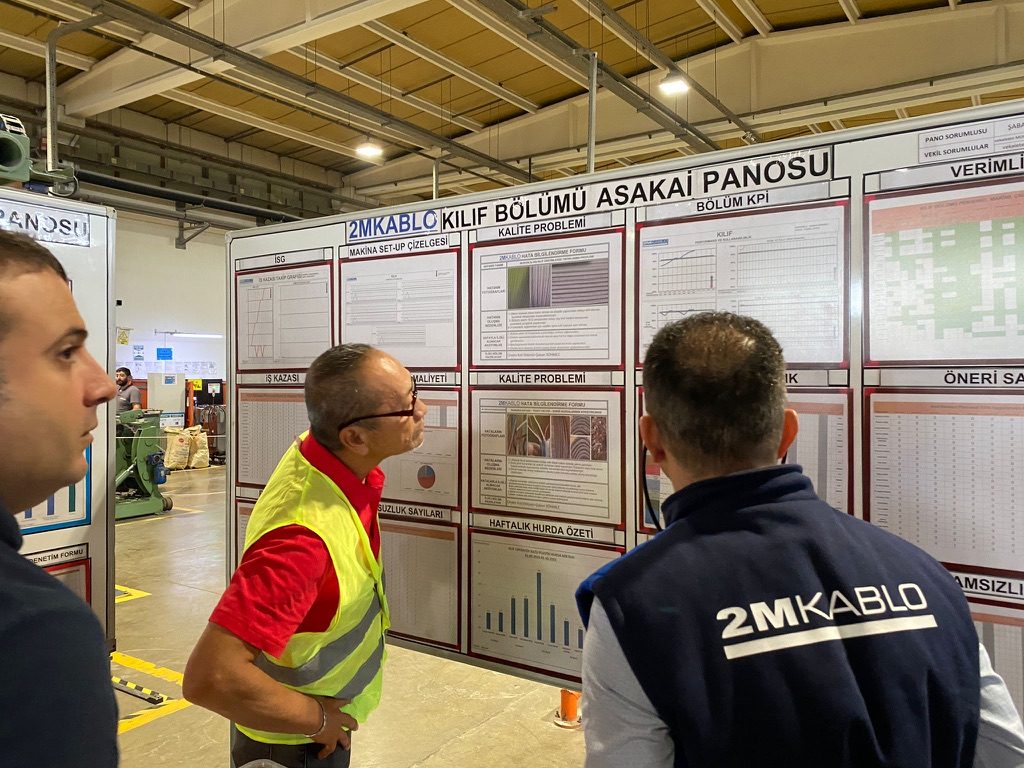
In the daily shop floor management meetings of many factories, similar questions are asked: How many units did we produce today? Did we keep to the plan? Did the shipment go out? Is overtime needed? All of these are important questions. But from a lean management perspective, we should add another question next to them: “How much of today’s working time did we use to create added value?”
Because a factory’s real competitiveness comes not from total working hours but from how much of those hours it can convert into value the customer pays for. In an environment where labor costs are rising, the solution is not only to look for cheaper labor or reduce headcount. First, the losses that consume the time of existing human resources must be eliminated:
- Reduce waiting.
- Solve the root causes of downtime.
- Reduce rework.
- Improve set-up times.
- Improve standard work.
- Balance workloads.
And manage all of this with daily, weekly and monthly PDCA and kaizen activities. Because competitive advantage comes not so much from how many hours people work but from how much value you can produce in those hours.
Conclusion
Labor can be expensive. What is really expensive is losing high-cost labor hours on non-value-added activities. To measure labor loss and overtime causes in your factory, see our lean process analysis service or get in touch with us.