
Gemba Partner
Request a discovery call
Gemba Partner
Home/Success Stories/Bicycle Manufacturing
Success story · Bicycle Manufacturing

We Did What Was Called Impossible: From 500 to 900 Units with the Same Team

In a transformation starting at the assembly line of a long-established Turkish bicycle manufacturer, shift output rose from 500 to 900 units with the same 22-person team; no additional hiring was needed.

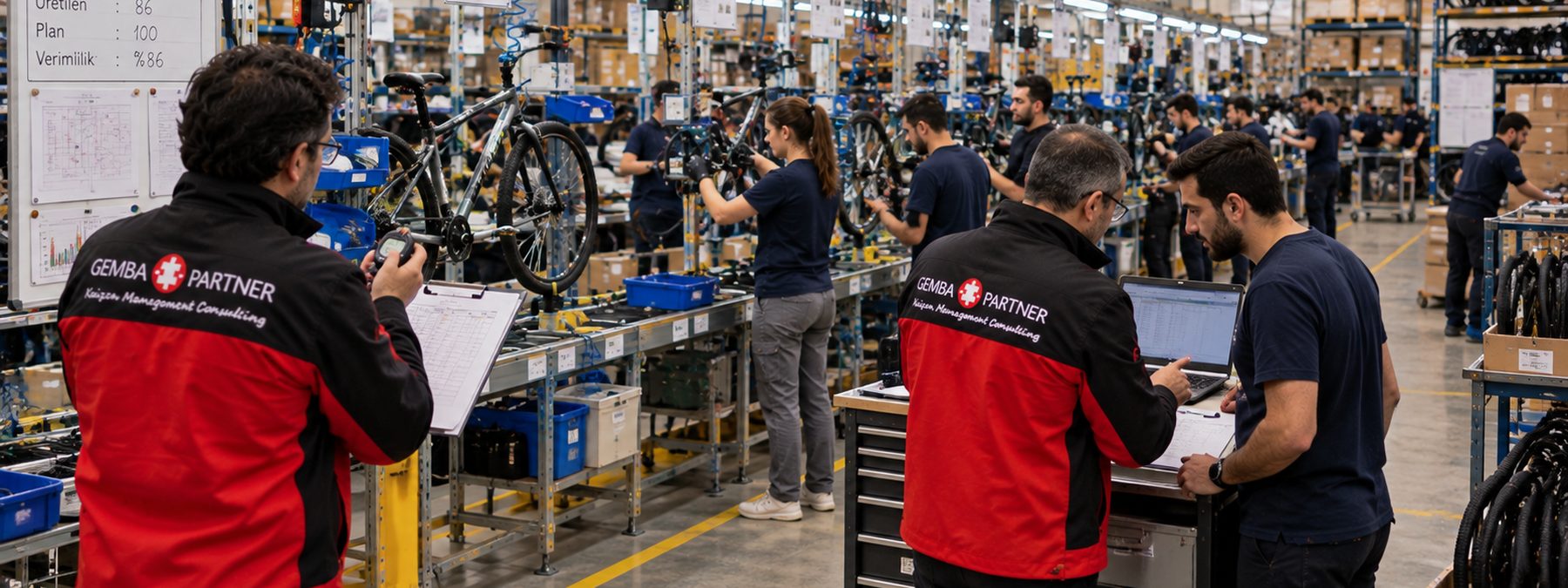
Assembly line balancing and factory flow transformation in bicycle manufacturing

Real Results Achieved Together

The capacity problem was not the number of employees or equipment; it was the flow of the production system.

900units per shift (from 500)
80%increase in output per employee per shift
22people in the same team, no additional staff

Gains of the Transformation

  • Line balancing raised output from 500 to 650 units
  • Workshops moved to a one-piece flow system
  • Work-in-process inventory was minimized
  • The assembly line was fed on a just-in-time principle

Starting Point: 500 Units Was Considered “Capacity”

One of Turkey’s long-established and leading bicycle brands offered a wide product range for every age group. However, long lead times, low productivity and operational data that did not provide enough guidance prevented the factory’s real capacity from being used.

The assembly line’s shift target was 500 bicycles, and current performance was accepted as the capacity the plant could reach. Time measurements and workload analyses showed that this level was well below real capacity. The main problems were:

  • Unbalanced workload: There were non-value-adding activities and unbalanced load between operations.
  • Accumulating work-in-process inventory: Inventory built up between workshops, and bottleneck lines slowed the flow.
  • Complex factory layout: A long and complicated product flow extended total lead time, and the assembly line could not be fed at the right time and in the right quantity.

Approach: First the Line, Then the Whole Factory

The transformation began at the assembly line, the production point closest to the customer. In the first phase, operation times were measured, workloads were balanced among employees, non-value-adding work was removed and the line’s working order was rebuilt. With these changes, shift output rose from 500 to 650 units.

In the second phase, the entire production system was reconsidered:

  • The factory layout plan was changed from the ground up.
  • Lines that created bottlenecks and inventory were repositioned.
  • Workshops moved to a one-piece flow system.
  • Balance was established between the production lines and the assembly line.
  • The assembly line was fed on a just-in-time principle.
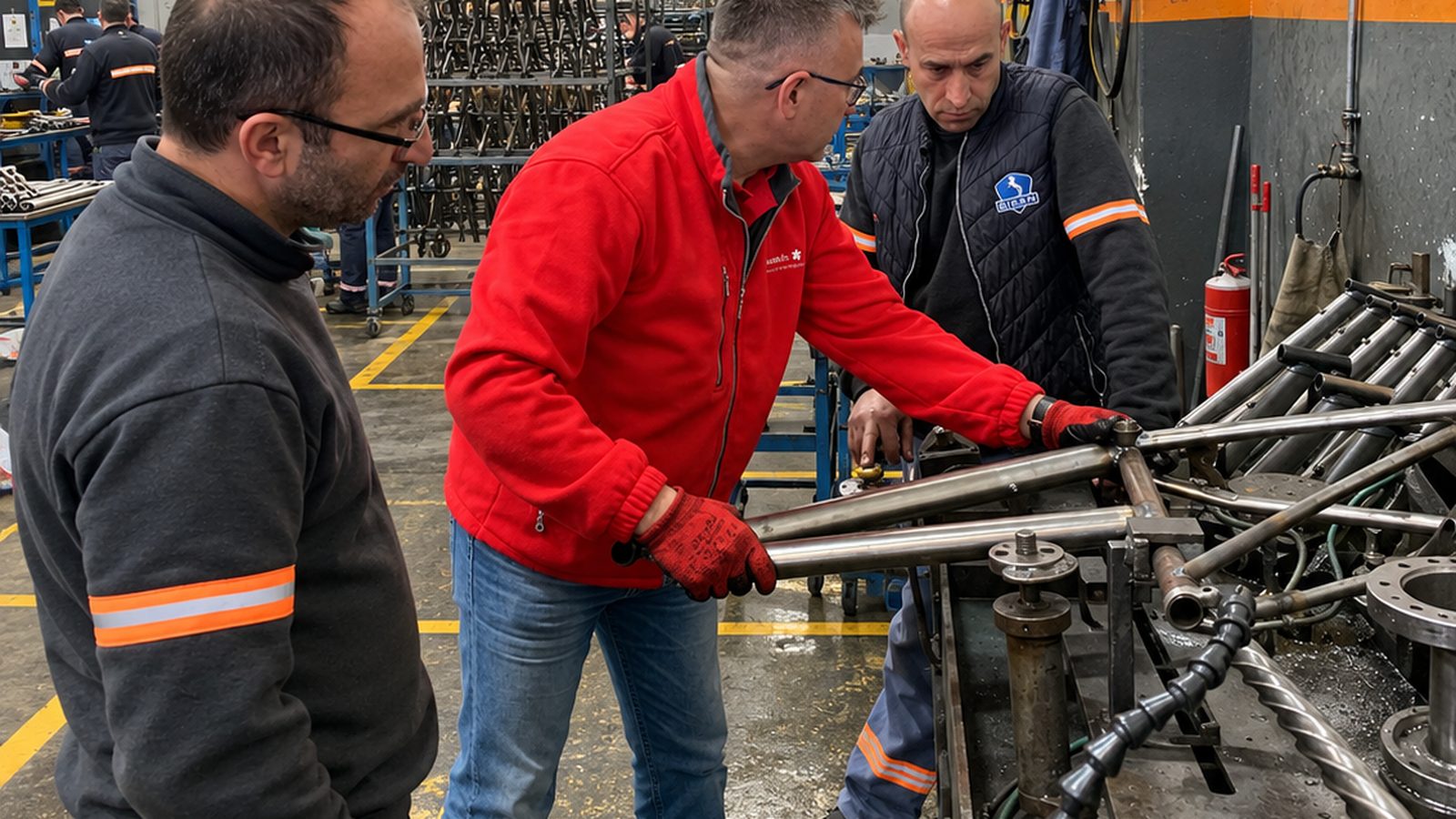
Workload balancing and one-piece flow implementation in a bicycle factory
Workshops stopped being independent departments and became parts of the same production flow.

Result: The Transformation Scorecard

With the same 22-person team, shift output rose from 500 to 900 units; total output increased by 80% and output per employee per shift by about 80%. The results were achieved without any need for additional employees, by using existing resources more effectively.

ParameterBeforeAfterImprovement
Shift output (after line balancing)500 units650 unitsFirst phase
Shift output (after factory flow transformation)500 units900 units+%80
Number of employees22 people22 peopleNo additional staff
Output per employee per shiftBaseline≈ +%80Productivity increase

If you think you need more employees or new machines to reach your production targets, let us first assess together how much of your existing capacity you are actually using.
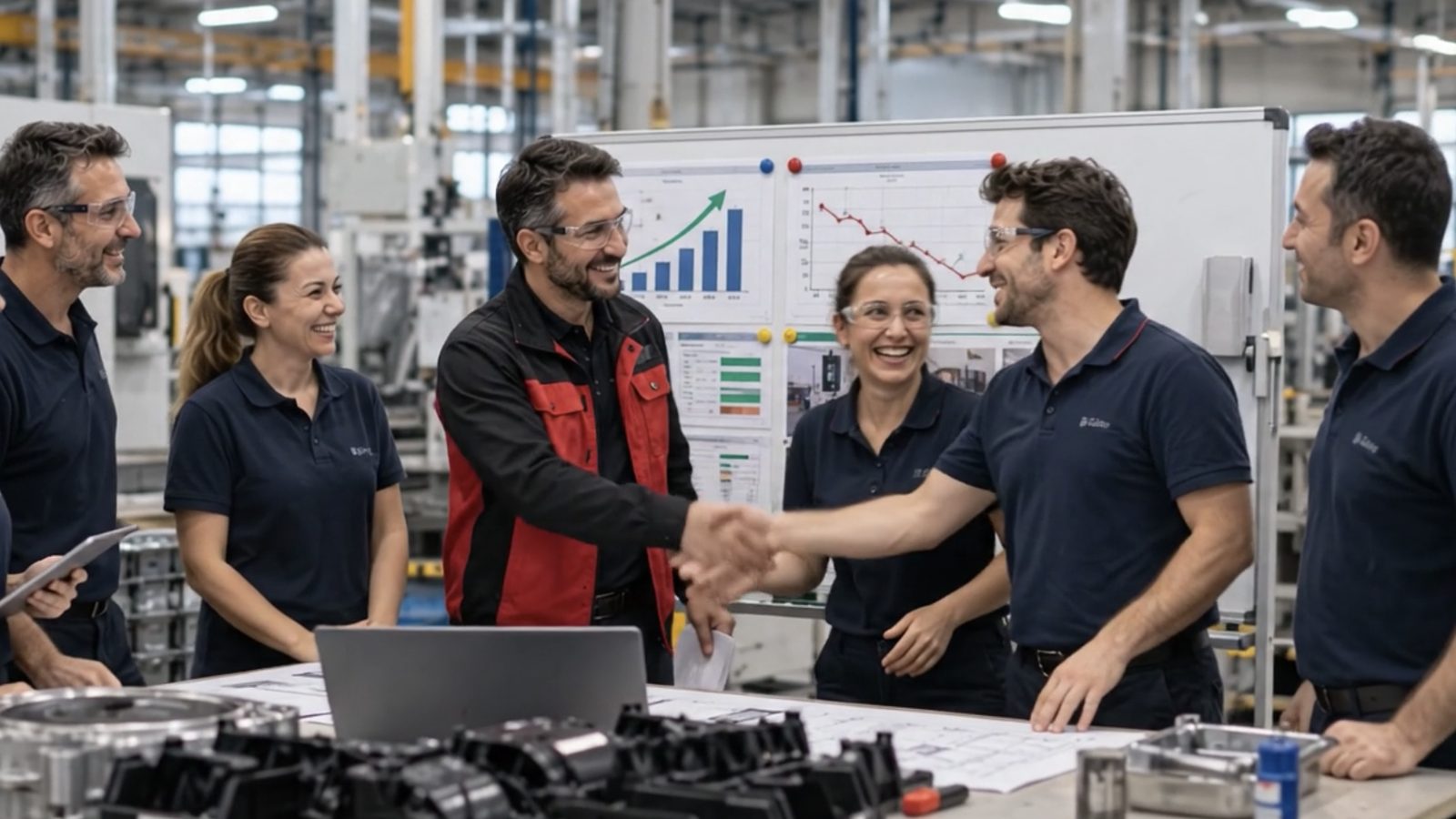
Factory layout and material flow in bicycle manufacturing

Request a Quick Diagnosis on Your Shop Floor

With the Quick Shop Floor Diagnosis, let us analyze your production flow, workload balance, factory layout, work-in-process inventory and capacity utilization, and build your tailored transformation roadmap together.

Request a quick diagnosis

Explore Our Other Success Stories

35%productivity increase
Industrial Products

35% productivity increase in industrial manufacturing

Four years of lean transformation: the same volume with a smaller workforce.

→
€98,000operational gain in 6 months
Automotive

€98,000 gain in 6 months at an automotive supplier

A lean leadership program made the existing WCM system effective on the shop floor.

→
50%reduction in WIP inventory
White Goods

Smart layout instead of a new building: 50% less WIP inventory

With a flow-based layout, 12 new machines were installed without an additional building investment.

→
39%warehouse capacity recovered
Retail

39% more capacity without enlarging the store warehouse

Product retrieval time in the store warehouse fell from 15 minutes to 5 minutes.

→
82%OEE (up from 65%)
Food

OEE from 65% to 82% in food production

In frozen food production, lead time fell from 10 days to 4.5 days.

→
70%reduction in WIP inventory
Construction Materials

We fit a 3-floor production facility into 2 floors and cut inventory by 70%

Continuous flow and Kanban raised operational efficiency by 40%.

→
76%OEE (up from 65%)
Defense Industry

OEE rose from 65% to 76% in the defense industry

SMED and WIP balancing paid back the investment in two months.

→
91.2%machine availability
Automotive · TPM

TPM lifted machine availability from 83% to 91.2%

Preventive and autonomous maintenance plus technical skills reduced equipment downtime.

→
27%daily shipment increase
Logistics

Shop floor management lifted daily shipments 27%

Shop floor management, 5S and vehicle traffic order paid back the investment in four months.

→
See all our success stories →